
• Essentials
    • Introduction to policy careers
    • Testing your fit for policy
    • Professional development
  • Pathways into policy
    • Undergraduate advice
    • Graduate school
      • Policy masters
      • Law school
      • PhDs
    • Policy internships
      • Congress internships
      • Semester in DC programs
      • Virtual student federal service
    • Policy fellowships
      • Fellowship database
      • Congress fellowships
      • Think tank fellowships
      • Federal agency fellowships
      • Part-time fellowships
      • State-level fellowships
    • Full-time policy roles
    • Short-term policy programs
    • Foreign nationals information
    • Political campaigning
  • Policy institutions
    • Congress
      • Congress guide
      • Congress internships
      • Congress fellowships
      • Full-time roles in Congress
    • Think tanks
      • Think tank guide
      • Think tank fellowships
      • Think tank list
    • Executive branch
      • AI policy overview
      • Biosecurity policy overview
      • Agency profiles
      • Researching agencies & offices
      • Agency application advice
      • Agency fellowships
      • Executive branch resources
    • State-level policy careers
    • ARPA careers
    • National labs & FFRDCs
    • Intelligence community (IC)
    • Multilateral governance careers
  • Policy areas
    • AI policy
      • AI policy resources
      • AI agency profiles
      • AI policy fellowships
      • AI policy think tanks
      • AI congressional committees
    • Biosecurity policy
      • Biosecurity policy resources
      • Biosecurity agency profiles
      • Biosecurity policy fellowships
      • Biosecurity policy think tanks
      • Bio congressional committees
    • China & tech policy
      • China policy resources
      • China policy fellowships
      • China policy think tanks
      • China masters programs
    • Civic tech
      • Civic tech resources
      • Civic tech fellowships
      • Think tanks & nonprofits
    • Cyber policy
      • Cyber policy resources
      • Cyber policy fellowships
      • Cyber policy think tanks
    • Federal R&D funding
    • Nuclear security policy
      • Nuclear policy resources
      • Nuclear policy fellowships
      • Nuclear policy think tanks
    • Space policy
      • Space policy resources
      • Space policy fellowships
      • Space policy think tanks
  • Tips and resources
    • Application tips (resume, etc.)
      • Policy resumes
      • Policy cover letters
      • Using LinkedIn for policy roles
      • Agency application advice
    • Networking in policy
    • Pitching yourself in policy contexts
    • Security clearances
    • Partisan affiliation
    • Policy skills
    • Publishing in policy outlets
    • Career profiles
    • Resource list
  • Essentials
    • Intro to policy careers
    • Testing your fit for policy
    • Professional development
  • Pathways
    • Undergraduate advice
    • Graduate school
      • Policy masters
      • Law school
      • PhDs
    • Policy internships
      • Congress internships
      • Semester in DC programs
      • Virtual Student Federal Service
    • Policy fellowships
      • Fellowship database
      • Congress fellowships
      • Think tank fellowships
      • Federal agency fellowships
      • Part-time fellowships
      • State-level fellowships
    • Full-time roles
    • Short-term policy programs
    • Foreign nationals info
    • Political campaigns
  • Institutions
    • Congress
      • Congress guide
      • Congress internships
      • Congress fellowships
      • Full-time roles in Congress
    • Think tanks
      • Think tank guide
      • Think tank fellowships
      • Think tank list
    • Executive branch
      • AI policy overview
      • Biosecurity policy overview
      • Agency profiles
      • Agency application advice
      • Researching agencies
      • Agency fellowships
      • Executive branch resources
    • State-level policy
    • Advanced Research Project Agencies (ARPAs)
    • National labs & FFRDCs
    • Intelligence community
    • Multilateral governance
  • Policy areas
    • AI policy
      • AI policy resources
      • AI agency profiles
      • AI policy fellowships
      • AI policy think tanks
      • Congressional committees
    • Biosecurity policy
      • Biosecurity policy resources
      • Biosecurity agency profiles
      • Biosecurity fellowships
      • Biosecurity think tanks
      • Congressional committees
    • China & tech policy
      • China policy resources
      • China policy fellowships
      • China policy think tanks
      • China master’s programs
    • Civic tech
      • Civic tech resources
      • Civic tech fellowships
      • Think tanks & nonprofits
    • Cyber policy
      • Cyber policy resources
      • Cyber policy fellowships
      • Cyber policy think tanks
    • Federal R&D funding
    • Nuclear security policy
      • Nuclear policy resources
      • Nuclear policy fellowships
      • Nuclear policy think tanks
    • Space policy
      • Space policy resources
      • Space policy fellowships
      • Space policy think tanks
  • Tips & resources
    • Application tips (resumes, cover letter, LinkedIn, etc.)
      • Policy resumes
      • Policy cover letters
      • Using LinkedIn
      • Agency application advice
    • Networking in policy
    • Pitching yourself in policy
    • Security clearances
    • Partisan affiliation
    • Policy skills
    • Publishing in policy outlets
    • Career profiles
    • Resource list
  • Podcast
  • Connect
Home › Policy areas › Biosecurity policy

Biosecurity policy

This page lists resources on biosecurity policy, profiles of US federal agencies, fellowship programs, think tanks, and congressional committees.

Biosecurity policy resources

This list is an introduction to the field. While we couldn’t include many great resources here, we encourage you to do your own research on particular topics of interest.

Overview resources

  • B-SPAN: Interactive tool mapping US biodefense activities in the executive branch and in the legislative branch, Bipartisan Commission on Biodefense
  • US Government Biodefense Budget Breakdown, Council on Strategic Risks
  • Map of the Biosecurity Landscape

Newsletters

  • The Pandora Report, George Mason University Biodefense Program
  • Health Security Headlines, Johns Hopkins Center for Health Security
  • Global Biodefense newsletter
  • Pandemic Action Network newsletter
  • Daily Headlines, Center for Infectious Disease Research and Policy
  • POLITICO Pulse
  • STAT newsletters
  • FYI This Week, American Institute of Physics (science policy generally)
  • Pink Sheet, Citeline Regulatory (biotech industry news)
  • Bulletin of the Atomic Scientists newsletter

Books

  • Ending Epidemics: A History of Escape from Contagion (2023)
  • Pandora’s Gamble: Lab Leaks, Pandemics, and a World at Risk (2023)
  • How to Prevent the Next Pandemic (2022)
  • Uncontrolled Spread: Why COVID-19 Crushed Us and How We Can Defeat the Next Pandemic (2021)
  • Epidemics and Society: From the Black Death to the Present (2019)
  • Biosecurity Dilemmas: Dreaded Diseases, Ethical Responses, and the Health of Nations (2017)
  • Deadliest Enemy: Our War Against Killer Germs (2017)
  • Synthetic Biology: Safety, Security, and Promise (2016)
  • Biological Threats in the 21st Century: The Politics, People, Science and Historical Roots (2016)
  • Routledge Handbook of Global Health Security (2015)
  • The Dead Hand: The Untold Story of the Cold War Arms Race and its Dangerous Legacy (2009)
  • Bioterror and Biowarfare (2006)
  • Biohazard: The Chilling True Story of the Largest Covert Biological Weapons Program in the World (2000)

Podcasts

  • Poisons and Pestilence Podcast
  • Prevent Detect Respond (PDR) Podcast
  • This Podcast Will Kill You
  • Osterholm Update, Center for Infectious Disease Research & Policy
  • Hear This Idea (e.g. Sonia Ben Ouagrham-Gormley, Ajay Karpur, Jassi Pannu & Joshua Monrad, Saloni Dattani, Tessa Alexanian & Janvi Ahuja, Richard Bruns)
  • The 80,000 Hours Podcast has in-depth interviews with biosecurity and policy practitioners like Kevin Esvelt, Jaime Yassif, Pardis Sabeti, Andy Weber, Greg Lewis, Cassidy Nelson, Tom Inglesby, and Beth Cameron

Online courses

  • Next Generation Biosecurity: Responding to 21st Century Biorisks
  • Biosecurity Fundamentals Course, BlueDot Impact
  • Tech Diplomacy Academy, Krach Institute for Tech Diplomacy at Purdue (paid)
  • Nuclear Threat Initiative Education Center
  • Crash Course: Outbreak Science and Public Health 
  • Lecture series on relevant technical topics (microbiology, immunology, epidemiology, global health, virology, infectious disease dynamics, disease modeling, genomic epidemiology, one health policy, epidemics in western society since 1600)

Think tank reports and policy analysis 

  • Congressional Research Service reports (search term “bio”)
  • Health Security Net, a database of reports and government documents on pandemics
  • Envisioning an Independent Bioresponsibility Authority to Safeguard U.S. Leadership in the Life Sciences (2025), Scowcroft Institute, Texas A&M University
  • Towards a Theory of Pandemic-Proof PPE (2024), Blueprint Biosecurity (other reports)
  • Proposed Biosecurity Oversight Framework for the Future of Science (2023), National Science Advisory Board for Biosecurity (NSABB) 
  • Understanding the Global Gain-of-Function Research Landscape (2023), Center for Security and Emerging Technology (other reports)
  • Building Strong Biosafety and Biosecurity into the Expanding US Bioeconomy (2023), Johns Hopkins Center for Health Security (other reports)
  • Pathogen Early Warning: A Progress Report & Path Forward (2022), Council on Strategic Risks (other reports)
  • The Apollo Program for Biodefense (2021), Bipartisan Commission on Biodefense (other reports)
  • Global Health Security Index and Preventing Global Catastrophic Biological Risks (2020), Nuclear Threat Initiative (other reports)

Government strategies

  • Final Report (2025), National Security Commission on Emerging Biotechnology
  • Biodefense Posture Review (2023), DOD
  • National Biodefense Strategy and Implementation Plan (2022), White House
  • Executive Order on Advancing Biotechnology and Biomanufacturing Innovation (2022), White House
  • BARDA Strategic Plan, 2022-2026 (2023), BARDA
  • American Pandemic Preparedness Plan (2021), White House
  • Pandemic Preparedness Plan (2021), NIAID
  • National Strategy for a Resilient Public Health Supply Chain (2021), HHS

International organizations and treaties (see list)

  • World Health Organization (WHO)
  • World Organisation for Animal Health (WOAH)
  • Food and Agriculture Organization (FAO)
  • Global Health Security Agenda (GHSA)
  • Australia Group
  • Coalition for Epidemic Preparedness Innovations (CEPI)
  • International Biosecurity and Biosafety Initiative for Science (IBBIS)
  • WHO Pandemic Treaty (under negotiation)
  • Biological Weapons Convention (1975)

Conferences

  • Events calendar, Global Biodefense
  • Events calendar, Association for Biosafety and Biosecurity
  • Annual Biosafety & Biosecurity Conference, Association for Biosafety and Biosecurity
  • Global Health Security Conference
  • Chemical and Biological Defense Science & Technology Conference, Defense Threat Reduction Agency
  • Chemical and Biological Defense, Gordon Research Conferences
  • SynBioBeta Annual Conference

We aim to keep this page updated. You can recommend other resources here.

Biosecurity federal agency profiles

The US executive branch shapes and implements biosecurity policy and programs through its many departments and agencies, each leveraging its specific capabilities to address biological threats across prevention, detection, response, and recovery.

Their responsibilities include administering programs, allocating funds, and establishing policies for areas like developing and stockpiling medical countermeasures, monitoring and identifying emerging threats, and quickly deploying resources during outbreaks. Given the government’s complexity, it’s essential to understand the activities of specific agencies and offices involved in biosecurity and their roles in the broader ecosystem.

The following profiles outline federal agencies engaged in biosecurity-related policy and programs, including lists of major policy developments and relevant offices. To understand their differences, you might find it helpful to consider where each office or program falls along the following spectrums and their specific technology focus (e.g. medical countermeasures, health surveillance, PPE, or critical infrastructure):

  • Policy development vs. program execution
  • Domestic vs. international focus
  • Civilian vs. defense orientation
  • Independent operations vs. interagency collaboration
  • Fundamental research support vs. deployment of ready-to-use technology
  • Crisis response vs. long-term prevention

For further context, see also the Biodefense Budget Breakdown from the Council on Strategic Risks and the interactive tool B-SPAN from the Bipartisan Commission on Biodefense, which maps US executive branch biodefense activities and in Congress.

Executive branch biosecurity policy overview

This guide helps you explore biosecurity policy careers in the executive branch. It reviews key policy areas and agency roles and highlights key considerations to inform your career planning.
Executive Office of the President (EOP)

EOP is a group of offices and councils that support the president in executing their agenda domestically and internationally. EOP advises the president, coordinates policy development among federal agencies, and guides policy implementation.

EOP > National Security Council (NSC)

NSC coordinates the government’s national security enterprise and advises the president on national security matters. It designs short- and long-term national security strategies and coordinates national security policy implementation among agencies.

EOP > Office of Management & Budget (OMB)

OMB oversees the implementation of the president’s vision across the executive branch. It develops the president’s annual budget proposal, manages agency processes, reviews significant agency regulations, and supports presidential actions, including executive orders.

EOP > Office of Science & Tech Policy (OSTP)

OSTP is the president’s chief advisory body on science and technology. It provides strategic guidance for policymaking and government R&D spending, evaluates federal programs, and coordinates federal science and technology policy initiatives.

EOP > National Economic & Domestic Policy Councils (NEC & DPC)

NEC and DPC advise the president and coordinate policymaking processes for economic and domestic issues. Both have supported the development of major AI or biosecurity policy initiatives.

Department of Commerce (DOC)

Commerce promotes US economic growth and competitiveness through roles in data, innovation, and industry support. It plays key roles in AI and biosecurity, overseeing standard-setting, semiconductor and bio-manufacturing, and exports.

DOC > Bureau of Industry & Security (BIS)

BIS is the lead agency tasked with administering and enforcing export controls on dual-use items and technology. It’s central to US AI and biosecurity policy efforts since it controls the export of high-performance semiconductors and biological equipment and materials.

DOC> National Institute of Standards and Technology (NIST)

NIST develops standards, measurements, and technology to support US economic competitiveness, technological progress, improved product reliability, and technical security and safety.

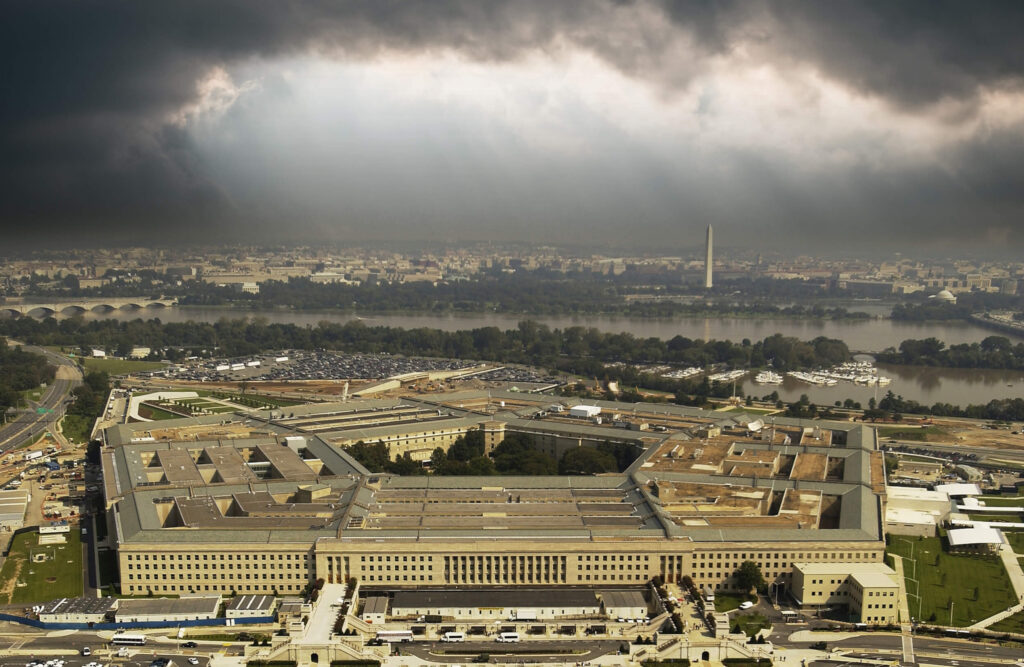
Department of Defense (DOD)

DOD’s mission is to “provide the military forces necessary to deter war and ensure the nation’s security.” DOD shapes AI and biosecurity policy through multiple levers, such as funding for research, procurement, and strategic guidance and policy documents.

DOD > Office of the SecDef (OSD)

OSD is responsible for policy development, planning, resource management, and program evaluation. OSD runs several AI and biosecurity-relevant efforts, including investing in research, purchasing equipment, drafting strategies, and more.

DOD > US military departments

The military departments—Army, Navy, and Air Force—organize, train, and equip the US armed forces. They play central roles in AI and biosecurity through large-scale R&D programs, operational testing, and technology adoption for national defense.

Dep. of Energy (DOE)

DOE oversees energy policy, scientific research, and the nuclear arsenal, being the largest US government funder of physical science research. It significantly contributes to science and tech development and policy, including via its national labs.

Dept. of Health & Human Services (HHS)

HHS plays a crucial role in healthcare, public health, medical research, and social services. The department is responsible for preparing for and responding to biological threats of any kind, including via agencies like CDC, ASPR, NIH, and FDA.

HHS > Administration for Strategic Preparedness & Response (ASPR)

ASPR’s mission is to “assist the country in preparing for, responding to, and recovering from public health emergencies and disasters.” It runs the Strategic National Stockpile, BARDA, and other programs.

HHS > Centers for Disease Control & Prevention (CDC)

CDC’s mission is to protect America from health, safety, and security threats, both foreign and domestic. The agency provides public health expertise, conducts research, and plays a central role in biosecurity, responding to disease outbreaks, pandemics, and biological threats.

HHS > Food & Drug Administration (FDA)

FDA ensures the safety, efficacy, and security of drugs, biological products, and medical devices, and it oversees food safety and tobacco regulation. The agency mainly contributes to biosecurity by regulating vaccines, treatments, and medical countermeasures.

HHS > National Institutes of Health (NIH)

NIH is the primary federal agency for biomedical and public health research and is the largest funding source for medical research globally. It supports various research initiatives aimed at advancing health, preventing disease, and ensuring biothreat preparedness.

Dept. of Homeland Security (DHS)

DHS is integral to US national security, handling cybersecurity, counterterrorism, border security, disaster response, and critical infrastructure protection. DHS’s role in emerging technology policy is growing, including dealing with AI, bio, and cyber-related threats.

Intelligence Community (IC)

The IC consists of 18 government agencies and offices that collect, analyze, and deliver intelligence to senior US leaders to support decision-making on critical issues. This work is crucial for informing US government policy and safeguarding national security.

Department of State (DOS)

State oversees US foreign policy, negotiating treaties, managing diplomatic missions, and representing the US in international bodies. In this capacity, State contributes to technology policy, which is becoming increasingly important in diplomacy.

US Department of Agriculture (USDA)

USDA develops and executes federal policies on agriculture, forestry, and rural economic development, aiming to support farmers and ensure a safe food supply. USDA contributes to biosecurity and advances food innovation to enhance food security and sustainability.

Biosecurity-relevant policy fellowships

The following fellowship programs are especially relevant for biosecurity policy work (see also our full fellowship database for 50+ opportunities):

  1. Horizon Fellowship (Horizon Institute for Public Service) – a 6-24 month full-time US emerging technology policy fellowship facilitating job placements in the US executive branch, Congress, and think tanks for early- and mid-career individuals. (The Horizon Fellowship and this website are both projects of the Horizon Institute.)
  2. AAAS Science and Technology Policy Fellowships (American Association for the Advancement of Science) – a 12-month fellowship in DC with four separate tracks, that places fellows within the executive branch, judicial branch, legislative branch, or in a nonprofit. The fellowship is for individuals with a doctoral-level degree.
  3. Presidential Management Fellowship – a prestigious 2-year full-time executive branch fellowship for graduate degree holders. It’s widely considered one of the best pathways into policy.
  4. Emerging Leaders in Biosecurity (ELBI) Fellowship (Johns Hopkins Center for Health Security) – a 10-month part-time program allowing talented graduate students and professionals to deepen their expertise, expand their network, and build their leadership skills through workshops and other events.
  5. Fellowship for Ending Bioweapons (Council on Strategic Risks) – a 12-month part-time program for early-career fellows to work with leading experts from CSR’s team and network to generate ideas for ending the threat of state biological weapons programs.
  6. Mid-Career Biodefense Bootcamp (Council on Strategic Risks) – a 2-month part-time hybrid fellowship involving a virtual course, a 3-day in-person workshop in DC, and a vibrant network for mid-career citizens of NATO countries and certain other US allies (i.e. typically 10+ years of professional and/or academic experience).
  7. Epidemic Intelligence Service (Centers for Disease Control and Prevention) – a “2-year post-graduate fellowship in applied epidemiology…EIS officers help public health officials investigate and control infectious disease outbreaks”
  8. Health Policy Fellowship (Robert Wood Johnson Foundation) – a 1-year full-time executive branch job placement program focused on health and biosecurity policy for mid-career professionals.
  9. Biosecurity Game Changers Fellowship (Brown University Pandemic Center) – a 1-year half-time (~50%) fellowship for mid-career African and US American health security experts (i.e. at least 5 years of experience) with leading biosecurity and global health organizations (CEPI, GAVI, IBBIS, BWC ISU, etc.)
  10. Scoville Peace Fellowship – a 6-9 month full-time security policy fellowship with DC-based NGOs (including some working on biosecurity, like NTI) for early-career bachelor’s or master’s graduates.
  11. NobleReach Scholars (NobleReach Foundation) – a 1-2 year full-time technology policy fellowship in government or mission-driven private companies for early-career technologists focusing on AI, biotech, computing & cybersecurity, or other areas.
  12. Mirzayan Science & Technology Policy Graduate Fellowship (National Academies of Sciences, Engineering, and Medicine) – a 12-week full-time science and technology policy training and networking program in Washington DC for graduate degree holders and current graduate students.
  13. Biotechnology Innovation & International Security Fellowship (Center for International Security and Cooperation, Stanford University) – an academic research fellowship for predoctoral and postdoctoral students, and junior faculty, for applicants from the US and abroad.
  14. Science Policy Fellowship (Research!America) – a 1-year paid fellowship for individuals with a PhD or other terminal degree who seek science policy experience in the areas of biomedical research, health services research and other health research disciplines
  15. Youth for Biosecurity Fellowship (United Nations Office for Disarmament Affairs) – a 3-month part-time learning and networking program involving online workshops and a Geneva visit for advanced degree holders under the age of 40 who are citizens in a low- or middle-income Biological Weapons Convention State Party
  16. Arms Control Negotiation Academy – a part-time “12-month, high-level professional development program for a competitively selected cohort of [16] rising international security experts and practitioners” involving three week-long workshops

Think tanks working on biosecurity policy

This list isn’t comprehensive, but we hope it’s a useful starting point if you’re interested in think tank work on biosecurity or pandemic preparedness policy.

  • Johns Hopkins Center for Health Security (CHS)
  • Bipartisan Commission on Biodefense (BCB)
  • Nuclear Threat Initiative (NTI): Biological
  • Council on Strategic Risks (CSR): Nolan Center on Strategic Weapons
  • RAND Corporation: Meselson Center, Bioterrorism
  • Institute for Progress (IFP): Biosecurity
  • Center for Security and Emerging Technology (CSET): Bio-Risk
  • Brown University Pandemic Center
  • Georgetown University Center for Global Health Science and Security (CGHSS)
  • Stanford University Center for International Security and Cooperation (CISAC): Biosecurity and Global Health Initiative
  • Center for Arms Control and Non-Proliferation (CACNP): Biological and Chemical Weapons
  • Federation for American Scientists (FAS)
  • Carnegie Endowment for International Peace: Technology and International Affairs – Biotechnology
  • Atlantic Council: Geotech Center Biosecurity and Health Program
  • Center for Strategic and International Studies (CSIS): Global Health Policy Center
  • National Academies of Sciences, Engineering, and Medicine (NASEM)
  • Center for a New American Security (CNAS)
  • James Martin Center for Nonproliferation Studies (CNS): Chemical and Biological Weapons Nonproliferation Program
  • Council on Foreign Relations (CFR): Public Health Threats and Pandemics
  • Blueprint Biosecurity

Congressional committees relevant to bio policy

Since biotech and biosecurity policy span an incredibly wide set of topics, many congressional committees are involved in governing the technology.

For a list of committees most involved in bio policy, see this section in Part 3 of our Congress guide. (See also this tool mapping congressional biodefense activities).

Other policy areas

AI policy

AI policy

Civic tech

Civic tech

Cyber policy

Cyber policy

Nuclear security

Nuclear security

Space policy

Space policy

Emerging Technology Policy Careers

A project by the

Subscribe for policy career tips and opportunities:

© 2024 | About | Feedback | Privacy policy


Loading Comments...