US military departments
This profile focuses on the US military departments—the Departments of the Army, Navy, and Air Force—the principal organizational components in the Department of War (DOW), and how they relate to AI and biotech/biosecurity. See also our profiles on:
Overview
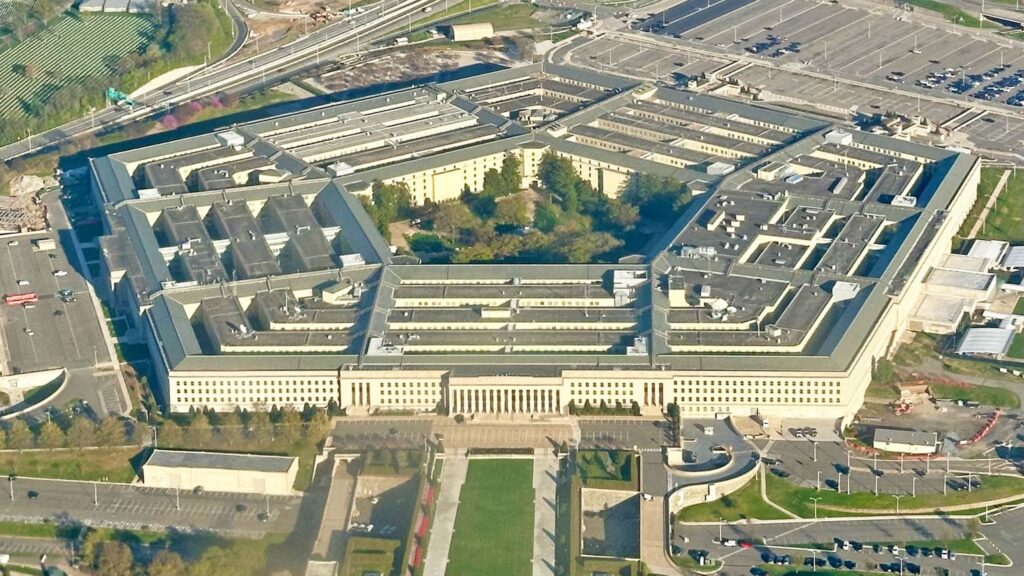
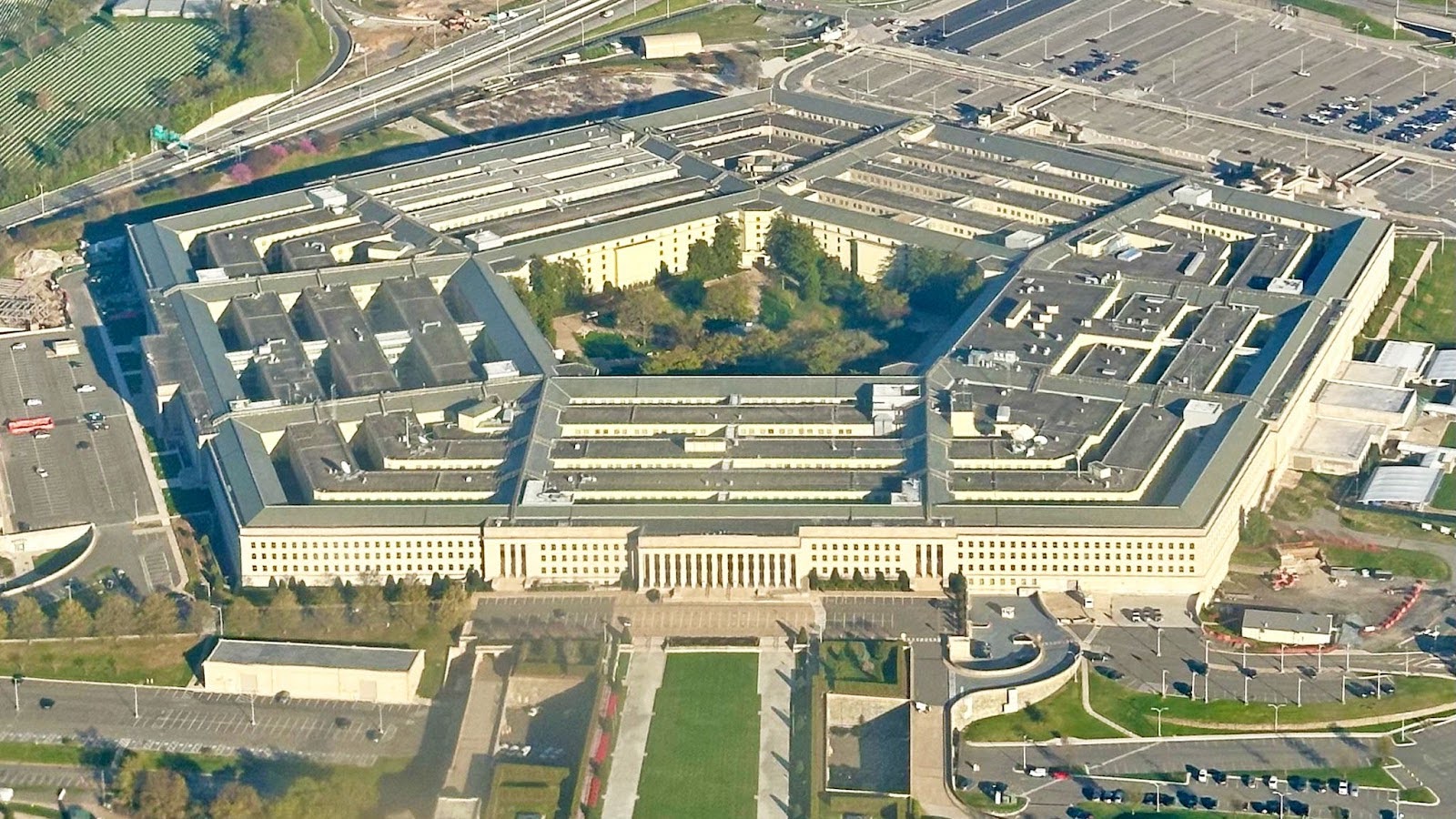
The Department of War (DOW) organizes the US Armed Forces through three military departments—the Departments of the Army, Navy, and Air Force. These departments underpin the US government’s national security efforts, with a combined budget exceeding $700 billion (~10% of the federal budget). Each department oversees one or more military services (e.g. Army, Navy, Space Force) and recruits, trains, and equips the forces necessary to defend US national interests.
The military departments play a central role in shaping emerging technologies through R&D, procurement, and adoption policies. They collectively oversee more than two-thirds of DOW’s $145 billion annual RDT&E (Research, Development, Test, and Evaluation) budget, making them both key developers and influential adopters of cutting-edge capabilities across the national security landscape. Emerging technologies like AI and autonomous systems, hypersonics, and biotechnology are among the services’ fastest-growing R&D investment areas, supporting initiatives from biological performance enhancement to autonomous vehicles and weapons systems.
Organization
DOW prepares and directs military forces through two distinct organizational structures:
- The military departments (Army, Navy, and Air Force) recruit, train, and equip military forces. They oversee a broad range of functions—known as DOTMLPF-P—that include doctrine, organization, training, materiel, leadership and education, personnel, facilities, and policy. The three departments manage five military services: the operational branches that carry out missions across land, sea, air, space, and cyberspace.
- The 11 unified combatant commands (“CCMDs”) plan and execute actual operations with the personnel and equipment supplied by the departments. They have either a geographic focus (e.g. Indo-Pacific Command or Central Command) or a functional focus (e.g. Special Operations Command or Cyber Command). For example, an Army division might be assigned to the US Indo-Pacific Command for a specific deployment in Asia.
This guide exclusively focuses on the military departments.
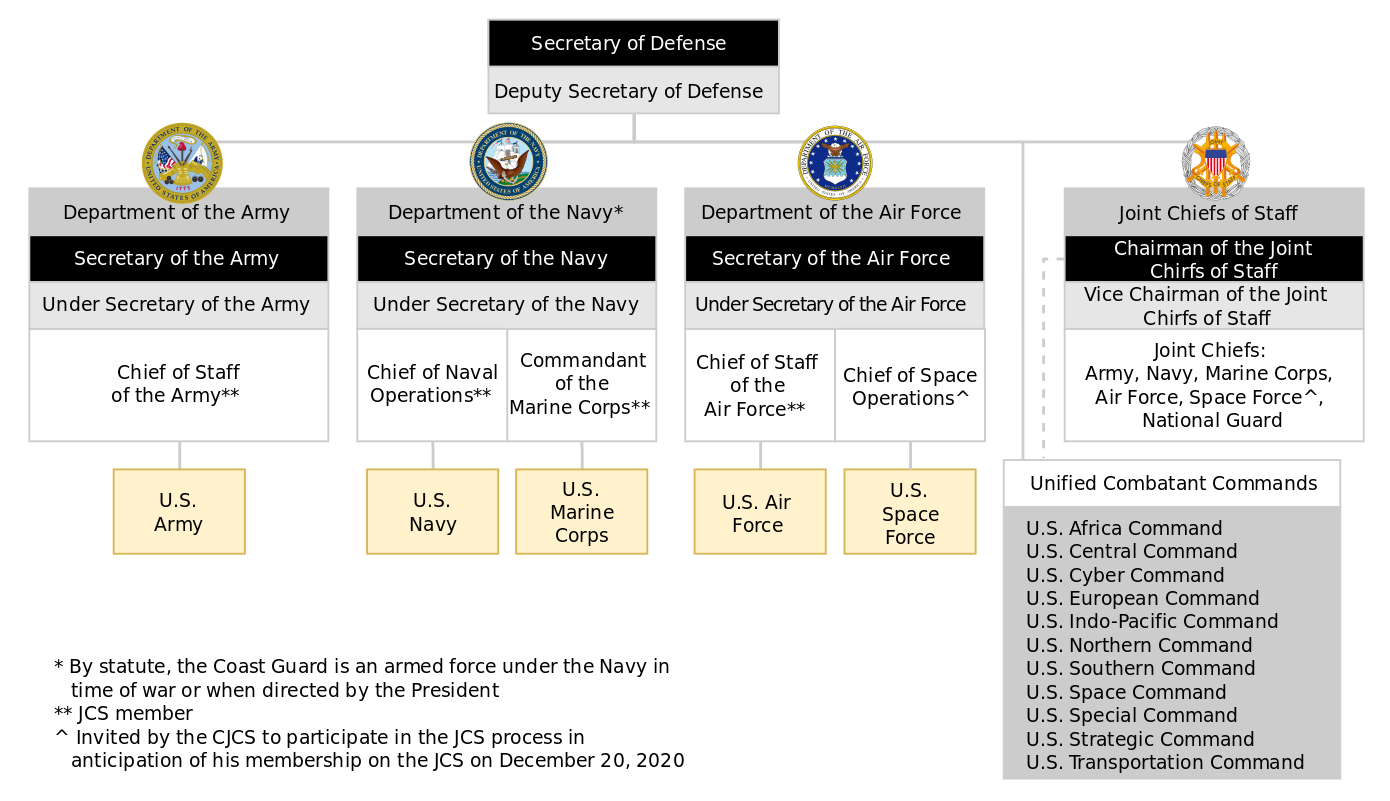
Each service department is led by a civilian secretary (e.g. secretary of the army) who reports to the secretary of defense. Under each civilian secretary, a uniformed service chief (e.g. Army Chief of Staff, Chief of Naval Operations) leads the uniformed service members and serves as the service’s top military advisor. These uniformed chiefs are also members of the Joint Chiefs of Staff, allowing them to advise the president and secretary of defense on military affairs. This civilian-military leadership structure ensures civilian oversight while leveraging professional military expertise.
Department | Services | Main activities | Budget (FY25 request) | Staff |
|---|---|---|---|---|
Army | Land warfare; securing territory; supporting civil authorities; security and humanitarian assistance | 300,000 civilians, 473,000 active-duty soldiers, 525,000 reserve soldiers | ||
Navy, Marine Corps, (Coast Guard during wartime) | Maritime dominance; expeditionary operations; amphibious assaults; naval logistics | 200,000 civilians, 510,000 active-duty personnel, 88,000 reservists | ||
Air Force, Space Force | Air superiority; global mobility and supply chains; space operations; nuclear deterrence; cyber and command and control | ~$218 billion (Air Force ~$188B, Space Force ~$29B) | 170,000 civilians, 510,000 active-duty personnel (including Space Force personnel) |
Military departments and emerging technology
Each military department plays a critical role in shaping how emerging technologies like AI and biotechnology are developed, acquired, and integrated into military forces. Dedicated offices within each department handle strategy, policy, acquisition, and training for these technologies, working alongside broader DOW entities such as the Chief Digital and AI Office to maintain strategic alignment. Though DOW-wide offices set priorities for military spending—and Congress authorizes and appropriates funds—the military departments retain significant influence over R&D and procurement decisions.
The departments operate their own research labs—the Army Research Laboratory, Navy’s Office of Naval Research or the Air Force’s Research Laboratory— performing R&D on emerging technologies relevant to their service’s mission. Other organizations, like the Army Futures Command, work on transitioning promising research into operational requirements.
Each service also has massive procurement budgets to purchase new technologies. Given the long, bureaucratic process for traditional procurement, various services have experimented with faster acquisition pathways, such as the Air Force’s Rapid Capabilities Office (DAF RCO), which has accelerated methods for developing, acquiring, and fielding critical combat capabilities.
Once new capabilities are acquired, specialized offices—such as the Navy’s warfare development command and the Air Force’s doctrine and training centers—develop operational concepts, update doctrine, and oversee training to ensure smooth integration into force structure and missions.
AI R&D and deployment
DOW is investing heavily in AI capabilities across all military branches. These applications range from enhancing combat effectiveness to improving administrative efficiency. Key use cases include:
- Predictive maintenance: AI systems analyze sensor data (e.g. engine temperature and vibrations) to forecast equipment failures before they occur, enabling preemptive maintenance that reduces costs and increases readiness.
- Autonomous systems: All services are developing unmanned vehicles with varying degrees of autonomy—from Army ground robots to Navy surface vessels to Air Force “loyal wingman” drones that support manned aircraft. AI navigation lets low-cost platforms scout, jam, and strike without risking crews (one form of “Manned-Unmanned Teaming”). The services are also working to automate processes like monitoring airspace and target recognition.
- Intelligence analysis: ML models process surveillance data to identify patterns human analysts might miss, reducing analysis time from days to minutes (e.g. Project Maven used AI to analyze drone surveillance footage and automatically detect and classify objects).
- Command and control: Initiatives like Project Convergence use AI to fuse data from satellites, drones, and ground sensors, to compress sensor-to-shooter timelines and automate target recognition across complex environments.
- Logistics optimization: AI enhances supply chain management by predicting demand, optimizing routes, and managing inventory across global military operations.
- Training and simulation: AI-powered virtual environments adapt to individual performance, providing personalized training at scale without the costs of live exercises.
- Cybersecurity operations: ML systems detect network anomalies and respond to threats at machine speed, protecting military networks that face millions of probing attempts daily.
- Decision support: AI tools help commanders visualize battlespaces, model courses of action, and identify adversary vulnerabilities across strategic, operational, and tactical levels.
Policymakers across all services continue addressing challenges in AI adoption, from building trust in AI among personnel to validating and testing AI systems in realistic military environments to ensuring interoperability with joint military operations.
Bio R&D and deployment
All military services play a role in developing and deploying biotechnology and biosecurity capabilities to enhance force health protection, improve operational resilience, and address emerging threats. Key applications include:
- Biodefense and threat detection: Advanced biosensors and detection systems can rapidly identify biological agents on the battlefield, with technologies ranging from portable pathogen detectors to AI-enabled aerosol monitors that can identify pathogens in minutes rather than days.
- Global biosecurity: Supporting biosecurity and pandemic preparedness; for instance, Air Force C-130s supported Ebola response in Africa, leading to improved procedures for airlifting patients with infectious diseases in specialized isolation pods.
- Medical countermeasures: Military-operated research facilities develop vaccines, treatments, and prophylactics against high-threat biological agents, including engineered pathogens, with accelerated platforms that can respond to novel threats within weeks.
- Wearable biosensors: Military researchers have developed physiological monitoring systems that track biomarkers to predict illness onset before symptoms appear, enhancing force readiness and providing early warning of potential exposures.
- CBRN protection systems: Enhanced protective gear and decontamination technologies leverage biotechnology advances to provide more breathable, effective protection against biological threats while maintaining operational effectiveness.
- Environmental biosurveillance: Global military installations maintain networks to monitor emerging infectious diseases in their operating areas.
- Biomaterials and biomanufacturing: investing in biological materials research for applications ranging from self-healing coatings for ships and aircraft to biocompatible implants that enhance recovery from combat injuries.
- Biofuels and energy: testing and certifying bio-based jet fuels to reduce dependence on traditional fuel sources, aligned with broader DOW energy goals.
- Human performance optimization: Biological approaches to enhance warfighter resilience, including microbiome-based interventions to improve stress response and sleep quality during extended deployments, fielding kits for personnel to operate in contaminated environments, and biogenerative life support that uses algae to recycle air and water.
Department of the Army (DA)
Originating as the Continental Army in 1775, the US Army is the oldest and largest military branch, specializing in land warfare. Its mission to “deploy, fight, and win our Nation’s wars” has driven its evolution from a small frontier force to a modern, globally deployed military. The department significantly expanded during the World Wars and included the Army Air Forces until 1947. During the Cold War, the Army maintained a large presence in Central Europe to deter and contain the Soviet Union. After the Cold War, it downsized significantly before expanding again to conduct sustained operations in Iraq and Afghanistan during the Global War on Terror. Today, the Army is adapting for an era of renewed great-power competition. With roughly one million uniformed members and hundreds of thousands of civilians and contractors, the Army conducts a broad range of missions—from conventional combat operations to counterterrorism and disaster relief—and actively invests in emerging technologies like AI and biotechnology to maintain strategic advantage.
Organization
DA oversees a single military branch—the US Army. DA is led by a presidentially-appointed, Senate-confirmed civilian secretary of the Army (SECARMY), responsible for administrative, budgeting, and policy decisions. The secretary works closely with the Army’s highest-ranking uniformed officer, the Army Chief of Staff (CSA), who also serves on the Joint Chiefs of Staff.
Under these senior leaders, the DA headquarters (HQDA) consists of the Secretariat (senior civilian deputies led by the SECARMY) and the Army Staff (who report to the SECARMY but are more directly managed by the CSA). Together, these bodies create and guide the implementation of Army-wide policy, strategic planning, and resource allocation decisions.
The Army consists of full-time, active-duty forces (the “regular army”) and two reserve components, which augment capacity during crises and national emergencies:
- The Army National Guard serves a dual federal-state role: guard units primarily operate under state authority and support domestic emergencies like natural disasters, civil unrest, or public health crises, but can also be federally mobilized by the president for overseas military operations or national emergencies.
- The Army Reserve is a federal reserve force composed of part-time soldiers who train regularly and can rapidly augment active forces during deployments or emergencies.
Within the Army, operational forces are grouped into units—such as divisions, corps, and armies—and assigned to combatant commands for specific missions. The Army also maintains substantial institutional organizations supporting readiness and national goals, including:
- The Army Corps of Engineers oversees military construction projects and major civil works initiatives (e.g. waterways maintenance, flood control, disaster recovery infrastructure).
- Engineer Research and Development Center (ERDC) is a key USACE research organization that conducts capabilities research in areas like construction technology, infrastructure resilience, and geospatial imaging.
- The Army Materiel Command and other logistics commands manage procurement, logistics, and equipment maintenance, ensuring operational readiness.
- The Army Futures Command (AFC), established in 2018, forecasts operational environments and informs the development of military systems needed to succeed on future battlefields (e.g. precision weaponry, advanced combat vehicles).
DA and AI policy
Like other military branches, the Army is increasingly pursuing AI and cyber capabilities to improve combat operations, logistics, maintenance, and security, and enabling autonomous systems to assist human soldiers in complex battlefield environments.
- Army AI Integration Center (AI2C): Operating under the Army’s Futures Command, AI2C integrates AI across doctrine, training, and operations, serving as the Army’s bridge to academia and industry.
- Army Cyber Command (ARCYBER): A component of US Cyber Command that defends Army networks, conducts offensive cyber operations, and increasingly leverages AI for cybersecurity.
- Assistant Secretary of the Army for Acquisition, Logistics, and Technology (ASA(ALT)): oversees Army R&D and procurement, including for AI systems.
- Training and Doctrine Command (TRADOC) and the Army War College: develop and disseminate strategic analyses and guidance on new technologies and threats.
- Army Program Executive Office on Intelligence, Electronic Warfare, and Sensors (PEO IEW&S): develop, test, and field military equipment from navigation packages and missile warning systems to biometric tools and electronic jammers.
- January 2024: The Army launches its Ground Expeditionary Autonomous Retrofit System (GEARS) project to develop autonomous navigation kits, reducing reliance on human operators. This initiative aligns with broader Army efforts in autonomous ground systems, including robotic armored vehicles that can navigate terrain, recognize obstacles, and scout ahead of manned units—one example of “Manned-Unmanned Teaming.”
- 2023-2024: The Army’s 18th Airborne Corps develops the Maven Smart System (MSS), an AI-based decision-support system that can rapidly identify and prioritize battlefield targets, reducing processing time from hours to under a minute.
- 2023: Army ethicists and policy leads (including at AI2C and Army Futures Command) draft a Responsible AI Implementation Plan to ensure all new AI systems meet safety and ethical standards.
- 2021-2022: The Army’s annual Project Convergence exercises tested cutting-edge AI and autonomous systems in warfighting scenarios. Project Convergence 21, for example, experimented with linking Army artillery sensors and shooters via AI algorithms that drastically reduced the “sensor-to-shooter” timeline. In these demos, autonomous drones and ground robots, aided by machine-learning, detected targets and passed data through an AI system to recommend fire missions in seconds.
- October 2018: The Army establishes the AI Task Force at Carnegie Mellon University, which has since evolved into the Army AI Integration Center (AI2C), serving as the Army’s hub for AI strategy, implementation, and collaboration with academia and industry.
DA and bio policy
The US Army has a long-standing role in biotechnology and biosecurity, with efforts to protect soldiers, support national biodefense, and advance innovation for military readiness.
- US Army Medical Research and Development Command (USAMRDC): oversees military medical R&D, including labs focused on infectious disease, diagnostics, and countermeasures.
- US Army Medical Research Institute of Infectious Diseases (USAMRIID): conducts R&D on vaccines and treatments for high-risk pathogens (e.g. Ebola, anthrax) and operates DOW’s sole Biosafety Level 4 facility for handling the deadliest airborne pathogens.
- Walter Reed Army Institute of Research (WRAIR): develops vaccines for diseases affecting deployed troops (e.g. malaria, COVID-19), including a candidate pan-coronavirus vaccine.
- 20th CBRNE Command and Chemical Corps (CBRNE): specializes in responses to weapons of mass destruction (WMD) incidents and helps shape Army policy on CBRN readiness, force protection, and training.
- Combat Capabilities Development Command Chemical Biological Center (DEVCOM BCB): facilitates R&D and testing for non-medical chemical and biological defense to protect “warfighters, first responders and the nation.”
- Assistant Secretary of the Army for Acquisition, Logistics, and Technology (ASA(ALT)): oversees Army R&D and procurement, including for biotechnologies.
- Joint Program Executive Office for CBRN Defense (JPEO-CBRND): manages investments in CBRN defense equipment and medical countermeasures, including equipping all services with biosensors, protective suits, and decontamination systems.
- September 2024: DEVCOM Chemical Biological Center researches rapid identification methods for emerging and genetically modified biological threats using DNA and RNA sequencing systems.
- 2023: The Army partners with the Advanced Biofuels and Bioproducts Process Development Unit (ABPDU) to launch a biomanufacturing training initiative to share biomanufacturing knowledge with researchers across DOW.
- 2023: DEVCOM Chemical Biological Center researches advance biosensor and biomaterials for improved operational readiness—including 3D-printed human skin tissue and portable chemical agent detectors.
- 2021: The Army reassesses its biothreat readiness post- COVID-19, driving ~$500 million in FY23 funding for detection systems, protective gear, and medical stockpiles, as well as expanded academic-industry partnerships, including support for mRNA biomanufacturing.
- 2020–21: The Army heavily supports Operation Warp Speed—the US government initiative to accelerate COVID-19 vaccine distribution at scale—with an Army General serving as the initiative’s chief operating officer. Scientists at WRAIR and USAMRIID contributed to vaccine and therapeutic development, drawing on decades of infectious disease research. Army Materiel Command helped scale domestic vaccine and PPE production, while medical units and field hospitals deployed to hard-hit areas. Over 40,000 National Guard troops supported testing, logistics, and vaccination.
Department of the Navy (DON)
DON oversees two military services: the US Navy, responsible for maritime dominance, global power projection, and naval warfare capabilities, and the US Marine Corps, specializing in rapid expeditionary operations, amphibious assaults, and crisis response. Both services originated in 1775 as the Continental Navy and Marines, respectively, and have played critical roles in conflicts since, from the War of 1812 to both World Wars. Together, these services support national security by controlling sea lanes, projecting military strength globally, and conducting amphibious operations.
Organization
DON is headed by a civilian secretary of the Navy (SECNAV), appointed by the president and confirmed by the Senate, who oversees administration, procurement, and overall readiness for both the Navy and Marine Corps. Under the SECNAV, each service has its own senior uniformed leader: the Chief of Naval Operations (CNO), a four-star admiral and the Commandant of the Marine Corps (CMC), a four-star general. These service chiefs coordinate with the SECNAV and the Joint Chiefs of Staff on military recruitment, training, equipping, and policy, including on AI and biotechnology modernization issues. Each service also maintains its own senior staff structure—OPNAV (the Office of the Chief of Naval Operations) for the Navy, and Headquarters Marine Corps (HQMC) for the Marine Corps—which supports service-specific planning, operations, and resource management. Both share key administrative facilities, including Pentagon headquarters.
The Navy organizes its forces into major commands, such as:
- US Fleet Forces Command (USFF): prepares and certifies naval forces for deployment, ensuring units are combat-ready.
- US Pacific Fleet (USPACFLT): oversees Navy resources and personnel in the Pacific region
- US Naval Forces Europe-Africa (NAVEUR-NAVAF): coordinates Navy activities in Europe and Africa.
Specialized “Type Commands” (TYCOMs) manage specific equipment types, including Naval Sea Systems Command (NAVSEA) for ships and maritime systems and Naval Air Systems Command (NAVAIR) for aircraft and aerial systems.
The Marine Corps operates through a separate structure, including (for example) Marine Forces Command (MARFORCOM), Marine Forces Pacific (MARFORPAC), and Marine Forces Reserve. Marines maintain their own air, ground, and logistics components, making them a complete fighting force. While independent in many ways, Marines also work closely with the Navy through the Fleet Marine Force structure, allowing Marines to deploy from Navy ships for joint expeditionary operations. The Marine Corps Combat Development Command develops Marine-specific doctrine, training methods, and equipment requirements to maintain the Corps’ unique warfighting capabilities.
DON and AI policy
DON plays a critical role in the adoption of AI and autonomous systems in maritime and expeditionary warfare, such as the development of uncrewed surface ships, underwater drones, and carrier-based unmanned aircraft. Like the other services, the Navy and Marine Corps are also exploring AI integration across operations, from maintenance and logistics to combat decision-making. The Navy is expected to release a strategy on AI use cases by 2026.
The Navy has established numerous task forces to coordinate AI adoption across its warfare communities, including cross-functional teams addressing AI use in the surface fleet, undersea domain, naval aviation, and Marine Corps operations. Critical to these efforts are the Navy and Marine Corps systems commands—such as Naval Air Systems Command (NAVAIR), Naval Sea Systems Command (NAVSEA), and Marine Corps Systems Command (MARCORSYSCOM)—which lead acquisition, R&D, and prototyping efforts to accelerate AI integration into naval and Marine missions.
- Office of Naval Research (ONR): drives R&D in AI, autonomy, advanced sensing, and other emerging technologies for naval applications; funds early-stage innovation and transitions promising concepts into operational systems for USN and USMC.
- Naval Research Laboratory (NRL): conducts in-house scientific and engineering research across areas like autonomy, machine learning, cybersecurity, and quantum systems; works with ONR to prototype and operationalize new AI capabilities.
- Chief Technology Officer (CTO) and Chief Innovation Officers (CIOs): guide strategic technology integration across DON; help align innovation efforts—including AI adoption—with both operational needs and long-term force design.
- Naval Air Systems Command (NAVAIR), Naval Sea Systems Command (NAVSEA), and Marine Corps Systems Command (MARCORSYSCOM): lead acquisition, R&D, and prototyping for platforms and systems across domains; shape system requirements and experimentation strategies for AI integration.
- 2023: Project Overmatch, the Navy’s flagship contribution to the DOW’s Joint All-Domain Command and Control (JADC2) initiative, ramps up operational testing, AI-enabled tools for sensing, targeting, and command-and-control were deployed with the Carl Vinson Carrier Strike Group off the California coast.
- 2023: Task Force 59 of the US Fifth Fleet expands testing of AI-enabled unmanned surface and underwater vehicles—significantly improving maritime domain awareness and anomaly detection in operational settings.
- 2021–2022: The Navy launches a series of AI-focused task forces to accelerate AI adoption and integration across mission areas. These included Task Force Hopper (named after computing pioneer Rear Admiral Grace Hopper), created to modernize the Navy’s digital infrastructure, build comprehensive data catalogs, and pilot machine learning applications across the surface fleet.
DON and bio policy
The Navy has long invested in biotechnology innovation, driven by its need for sustained, independent operations at sea. In the Navy and Marine Corps, bio-related efforts spans several areas:
- maintaining the health and performance of sailors and Marines,
- developing alternative energy and materials to enhance force endurance, and
- protecting forces against biological threats.
The Office of Naval Research (ONR), for instance, runs synthetic biology programs to develop novel materials like adhesives for ship repair or anti-fouling coatings to prevent marine growth on vessel hulls.
On the medical side, the Navy operates several international research labs in partnership with host nations. These research units (like NAMRU in Asia and South America) track diseases that could affect deployed forces and research medical countermeasures, including treatments and vaccines. The Navy is also exploring emerging biotech like gene editing, microbiome research, and biomanufacturing for military applications—the DOW’s 2022 Biotech Modernization strategy, for example, highlighted opportunities like self-repairing uniform fabrics and microbes engineered to produce critical supplies.
- Office of Naval Research (ONR): supports cutting-edge research in biotechnology and synthetic biology for naval applications, including biofouling prevention, environmental sensing, and medical innovations; enables collaborations between the Navy and academic, commercial, and federal research entities.
- Naval Research Laboratory (NRL): investigates biotechnology and biomedical solutions relevant to naval operations, such as microbial sensing, bio-based materials, and health surveillance; helps translate biological research into tools for operational resilience.
- Naval Medical Research Center (NMRC): leads infectious disease research, vaccine development, and deployable health technologies for naval forces; plays a central role in protecting force health and advancing naval medicine in contested environments.
- Naval Health Research Center (NHRC): focuses on operational medical readiness, injury prevention, and performance optimization for sailors and Marines; supports surveillance and response capabilities for infectious disease threats.
- USMC Chemical Biological Incident Response Force (CBIRF): specialized Marine unit supporting domestic CBRN event response.
- 2023: The Naval Medical Research Unit Indo-Pacific (NAMRU-IP) enhances its disease surveillance network across Southeast Asia, collaborating with host nations to research infectious diseases important to military operations and public health. These activities have reinforced policies on force health protection, including improved protocols for disease prevention and response to maintain readiness.
- 2012-2016: The Navy deploys its ‘Great Green Fleet’ with a carrier strike group operating on a 50/50 blend of biofuel and traditional fuel, demonstrating the technical viability of sustainable energy in combat operations. This initiative spurred the certification of numerous aircraft and ships to use biofuel blends, setting the stage for DOW-wide adoption of operational energy innovations.
Department of the Air Force (DAF)
The Department of the Air Force, established in 1947 through the National Security Act, is charged with gaining and maintaining air and space superiority, providing global mobility, and ensuring strategic nuclear deterrence. In 2019, the Space Force was established under DAF to manage growing demands for military space operations and defend US space assets. Together, these services enable national security through dominance in air, space, and cyberspace, operating everything from hypersonics and nuclear bombers to GPS satellites and missile warning systems.
Organization
DAF manages two services: the US Air Force, which delivers air superiority, global strike, and mobility capabilities, and the US Space Force, which provides space-based services and protection. DAF is headed by a civilian secretary of the Air Force, appointed by the president and confirmed by the Senate, who oversees administration, procurement, and overall readiness for the Air Force and Space Force. Under this secretary, a four-star general leads each service: the Chief of Staff of the Air Force (CSAF) for the Air Force and the Chief of Space Operations (CSO) for the Space Force.
The Air Force comprises major commands with specialized roles, such as:
- Air Combat Command: oversees fighter and bomber operations
- Air Mobility Command: manages aerial refueling and transport operations
- Air Force Global Strike Command: controls nuclear-capable bombers and intercontinental ballistic missiles (ICBMs)
The Air Force also has two reserve components:
- Air National Guard: supports state and federal missions, activated domestically by governors and federally during national crises
- Air Force Reserve: provides trained personnel and units for active Air Force missions, serving strictly under federal authority
The Space Force, being newer and smaller, operates with a flatter structure. Its primary organizational components are field commands, which include:
- Space Operations Command: conducts space operations and defense
- Space Systems Command: oversees space acquisitions and systems development
- Space Training and Readiness Command: manages training and doctrine
DAF and AI policy
DAF is increasingly pursuing AI and autonomous systems as part of broader modernization efforts. The Air Force aims to become “AI-ready by 2025” and fully “AI-competitive by 2027,” with a strong focus on autonomous aerial systems and manned-unmanned teaming through programs like Skyborg and the Collaborative Combat Aircraft (CCA) initiative.
- Air Force Research Laboratory (AFRL): central hub for scientific and technological innovation, driving advancements in AI, directed energy, and biotechnology.
- 711th Human Performance Wing: studies biotechnology related to human performance.
- AFWERX: innovation accelerator that collaborates with industry and startups to rapidly develop and integrate emerging technologies, including AI.
- Space Warfighting Analysis Center (Space Force): develops strategies and doctrines for integrating AI and emerging tech into space operations.
- Commercial Space Marketplace for Innovation and Collaboration (Space Force): facilitates partnerships with commercial entities to leverage private-sector AI advancements in space technologies.
- 2025: The US Space Force publishes its Data and AI FY2025 Strategic Action Plan, outlining initiatives to become a data-driven, AI-enabled service. The plan emphasizes developing AI tools for satellite constellation management and cultivating an AI-fluent Guardian workforce.
- 2023: The Air Force demonstrates significant milestones in autonomy through Skyborg and the Collaborative Combat Aircraft (“AI wingman”) programs, including successful piloting of the AI-controlled XQ-58A Valkyrie drone alongside manned aircraft.
- 2019: The Air Force partners with MIT to launch the Air Force–MIT AI Accelerator, which aims to facilitate collaboration between Air Force personnel (Airmen) and MIT researchers on AI applications. DAF has since pursued more public-private partnerships like this and has increasingly hired for talent with advanced STEM degrees.
DAF and bio policy
DAF uses biotechnology to enhance human performance, operational resilience, and sustainment—including initiatives to test bio-based jet fuels and biotech solutions for astronaut health.
- Air Force Research Laboratory (AFRL): leads research and development in biomaterials, biomanufacturing, and performance enhancement technologies.
- 711th Human Performance Wing: studies biotechnology related to human performance.
- Air Force Medical Command (AFMEDCOM): newly chartered to own enterprise‑wide medical readiness, research, and CBRN response.
- 2024: AFRL convenes DOW, industry, and academia for a first “Biotech Days Summit” to road‑map synthetic‑bio scale‑up and space‑medicine materials.
- 2024: DAF stands up the Air Force Medical Command (AFMEDCOM), a direct‑reporting unit that consolidates medical readiness, R&D, and bio‑surveillance to accelerate “warfighter medicine” modernization.
- 2020-2022: The Air Force heavily supported vaccine transport logistics during Operation Warp Speed. It updated its Public Health Emergency protocols across all bases, stockpiled PPE and lab testing equipment, and expanded its Epidemic Intelligence Service liaison program with the CDC.
Working in the military departments
Civilian positions within the Departments of the Army, Navy, and Air Force range from policy analysts and program managers to scientists and engineers. These departments also offer direct hiring authorities for critical skills in areas like AI, cybersecurity, and bioengineering, allowing them to expedite the hiring process for high-demand talent.
Types of employment
The military department operates through an integrated workforce spanning four main personnel categories: civilian employees, active-duty personnel, guard and reserve personnel, and defense contractors. These categories often work collaboratively in joint teams and integrated staff environments, allowing DOW to leverage diverse expertise while maintaining operational continuity.
Employment category | Key characteristics | Service commitment | Contribution to departments | Career progression |
|---|---|---|---|---|
Civilian employees | Federal employees; General Schedule (GS) 5-15 or Senior Executive Service (SES) | Indefinite career tenure | Provide continuity and support policy development, research, and program management across administration changes and military rotations. Civilians set strategy, manage programs, and help make policies that shape how the services organize, train, and equip their forces. | Can progress to Senior Executive Service (SES), the civilian equivalent of general/flag officers |
Active-duty personnel | Full-time uniformed service members across all ranks (E-1 through O-10); assigned based on service needs and special requirements | Initial service obligations typically range from 4-10 years; Permanent change-of-station (PCS) tours typically last 2-3 years, followed by reassignment to operational units or other staff positions | Each department assigns uniformed service members (typically mid-level or senior officers) to staff departmental positions for 2-3 year rotations, bringing operational expertise to policy offices. | Military career path with alternating operational and staff assignments |
Guard & reserve personnel | Part-time service across all ranks (enlisted, NCOs, officers) who receive drill pay and active-duty pay when mobilized | 1 drill weekend/month & 2 weeks annual training/yr, or short mobilizations | Specialized units provide critical support in strategic analysis and policy development (e.g. the Army Reserve’s Strategic Analysis Group, the Navy Reserve’s Strategic Policy units) | Dual career tracks: private sector employment with parallel military advancement |
Defense contractors | Private‑sector employees under government service contracts | Contract‑defined (often 1‑3 yrs w/ option years) | Provide specialized technical expertise, institutional knowledge, and surge capacity; works under department supervision on projects from weapons system development to policy analysis | Based on contract renewals and advancement within company; may transition to government roles |
Example roles
- Data Scientist: extracts actionable insights from data using scientific methods, statistics, programming, and AI.
- Machine Learning Engineer: develops algorithms for predictive maintenance of military vehicles and aircraft.
- AI Integration Lead: oversees implementation of AI applications across military platforms and decision systems.
- AI Ethics Advisor: ensures AI implementation aligns with DOW’s ethical principles, addressing deployment concerns.
- Autonomous Systems Engineer: develops unmanned vehicles and “loyal wingman” aircraft, advancing autonomous capabilities.
- Human-Machine Teaming Researcher: studies collaboration between soldiers and AI systems to enhance human-machine interactions.
- AI Strategy Advisor: develops policy guidance for AI implementation across the department, ensuring alignment with national security objectives.
- Biodefense Researcher: develops countermeasures against biological threats at Army labs, contributing to national security and public health.
- Synthetic Biology Program Manager: oversees research into engineered biological systems for defense applications, bridging biology and technology.
- CBRN Defense Policy Analyst: develops strategies to counter chemical and biological threats, informing policy and operational approaches.
- Biomanufacturing Technical Lead: explores on-demand biologics and medical supplies manufacturing, enhancing rapid response capabilities.
- Biosecurity Policy Advisor: ensures compliance with bioethics standards and treaties, guiding ethical considerations in biotechnological applications.
- Environmental Biotechnology Specialist: develops bio-based remediation for military installations, addressing environmental challenges through biotechnological solutions.
- Biometric Systems Engineer: implements biological identification technologies for access control, enhancing security measures.
Internships and fellowships
Each military department sponsors internship programs to develop talent pipelines for their civilian workforce. While uniformed service members enter through military recruitment channels, the civilian components of each department maintain separate hiring processes focused on technical and administrative expertise. Departments particularly seek individuals with backgrounds in fields like operations research, systems engineering, data science, and policy analysis to support their administrative and acquisition functions.
- SMART Scholarship‑for‑Service – full tuition scholarship for STEM undergraduates or graduate students, plus a $30–46k annual stipend, mentorship, internships at a DOW facility. Recipients must commit one year of post-grad DOW civilian employment for each academic year receiving the award. Applications open August to December annually.
- National Defense Science and Engineering Graduate (NDSEG) Fellowship – three‑year scholarship and stipend for PhD students in DOW-priority research areas
- Pathways Internship & Recent Grad Programs – allows students to work in departmental offices, with opportunities for conversion to permanent positions upon graduation. These positions exist across all three departments, with placements in the Pentagon, research laboratories, and field offices nationwide.
- McCain Strategic Defense Fellowship – a 1-year full-time “civilian fellowship program [for graduate degree holders] designed to provide leadership development for the commencement of a career track toward senior [DOW] leadership (undergoing reevaluation as of May 2025).
- Academic scholarships & tuition help: Beyond SMART, each service funds ROTC scholarships for uniformed commissioning routes that cover full or partial tuition plus a monthly stipend; the Health Professions Scholarship Program pays 100% of medical/dental school fees in exchange for a service commitment. Military academies, such as West Point, are another prestigious and free-tuition pathway into careers as a commissioned military officer.
- Army Combat Capabilities Command Internship – R&D rotations with a focus on new technological capabilities, autonomy, & biotech
- Naval Research Enterprise Internship Program – Lab slots each summer across Office of Naval Research (ONR), Naval Sea Systems Command (NAVSEA), Naval Air Systems Command (NAVAIR)
- Air Force Premier College Intern Program – 10‑week GS‑04/05 internships; direct pipeline to the Palace Acquire (PAQ) program and Copper Cap (COP) program. PAQ and COP are two Air Force civilian entry-level training programs aimed at recent graduates interested in various roles within the DAF, including science and engineering, cyber/IT, financial management, and contracting
Full-time jobs
For an overview of DOW emerging tech hiring, see our guide on working at DOW.
Each military department runs its own recruitment processes and can use direct hiring authorities (DHA)—especially for emerging technology-relevant roles—to expedite hiring for high-demand talent. Most jobs, including DHA ones, are posted on USAJOBS (often via the service’s portal, e.g. airforce.usajobs.gov for Air Force roles).
Each service also hosts its own civilian careers site (DA, DON, DAF).
Further reading
- Guide to the US Armed Forces, Third Way (2018)
- Demystifying the American Military: Institutions, Evolution, and Challenges Since 1789, P. Thornhill (2019)
- Technology and the American Way of War Since 1945, T. Mahnken (2008)
- The Warrior State: How Military Organization Structures Politics, E. Dolman (2004)





Notes
-
Defense spending accounts for nearly half of all federal discretionary spending—that is, spending that Congress directly controls through the annual appropriations process.
↩︎ -
Separate entities called Unified Combatant Commands manage the actual deployment and operational direction of troops (see more about this division below).
↩︎ -
In FY2024, DOW requested ~$145 billion for Research, Development, Test, and Evaluation (RDT&E)—the largest such request in its history, later enacted at $148.3 billion. Of the requested amount, about two-thirds (~$95–100B) was allocated to the military departments: the Department of the Air Force received $55.4B, the Department of the Navy received $26.9B, and the Department of the Army received $15.8B. The remaining third went to defense-wide agencies such as DARPA and the Missile Defense Agency.
↩︎ -
Often called the “administrative chain of command” and the “operational chain of command”, respectively.
↩︎
Several other important parts of DOW—including combat support agencies like the Defense Intelligence Agency and logistics organizations like the Defense Logistics Agency—sit outside the military departments and make up what’s often called the “Fourth Estate.” These organizations support military operations but are not managed by the military departments. -
The Coast Guard typically operates under the Department of Homeland Security (DHS) during peacetime, though it can be transferred to the Department of the Navy during wartime or by presidential directive (which last happened in WWII).
↩︎ -
Or “COCOMs”—both abbreviations are used.
↩︎ -
The Coast Guard typically operates under the Department of Homeland Security during peacetime, though it can be transferred to the Department of the Navy during wartime or by presidential directive. Even while under DHS, Coast Guard units can be assigned to support Combatant Command missions.
↩︎ -
Each service also has a senior enlisted advisor (e.g. the Sergeant Major of the Army), who provides the Secretary and Chief with input on issues affecting the enlisted force, such as morale, readiness, and professional development.
↩︎ -
See CRS, “Defense Primer: The Department of War,” January 22, 2025.
↩︎ -
~21.9% of DOW’s total budget and ~2.5% of the overall federal budget
↩︎ -
If the Department of the Army were a private company, its civilian workforce alone would rank among the top 15 US employers.
↩︎ -
~30.1% of DOW’s total budget and ~3.4% of the federal budget
↩︎ -
This includes roughly 337,000 active duty Navy sailors, 173,000 active duty Marine Corps personnel, 55,000 Navy Reserve and 33,000 Marine Reserve.
↩︎ -
~25.7% of the DOW’s total budget and ~2.9% of the overall federal budget (Air Force ~$188B, Space Force ~$29B)
↩︎ -
This includes roughly 326,000 active duty Air Force personnel, 9,400 active duty Space Force Guardians, 107,000 Air National Guard, and 70,000 Air Force Reserve members
↩︎ -
In May 2025, the Army announced plans to consolidate its Futures Command with its Training and Doctrine Command under a new command: the Army’s Transformation and Training Command.
↩︎ -
Often called “Other Transaction Authorities.”
↩︎ -
Originally launched in 2017, Project Maven was an experimental DOW initiative to integrate AI into video analysis workflows. It has since transitioned to the National Geospatial-Intelligence Agency (NGA), where it is now known simply as “Maven” and functions as a program of record, with an closer focus on satellite imagery. For more information, see NGA Director Vice Admiral Frank Whitworth’s remarks at Palantir (2024).
↩︎ -
The Joint Chiefs of Staff serve as the primary military advisory body to the president, secretary of defense, and National Security Council, consisting of senior uniformed leaders from each military service who provide strategic direction and operational oversight across all branches of the armed forces.
↩︎ -
The Army has proposed merging AFC with TRADOC, expanding its role in shaping how the Army prepares and trains for conflict.
↩︎ -
Program Executive Offices (PEOs) report to the Assistant Secretary of the Army for Acquisition, Logistics, and Technology (ASA(ALT)), which retains acquisition authority across the department. While Army Cross-Functional Teams (CFTs) blend personnel from ASA(ALT) and Army Futures Command (AFC), formal acquisition decisions remain under ASA(ALT)’s purview. As of 2025, Army leadership is considering structural changes—including reducing the number of PEOs and merging AFC with TRADOC—aimed at streamlining bureaucracy and acquisition processes.
↩︎ -
During wartime, DON also assumes operational control of the US Coast Guard, which otherwise operates under the Department of Homeland Security.
↩︎ -
In 1798, the War Department transferred oversight of the Navy to the newly established Navy Department; in 1834, the Marine Corps is also transferred.
↩︎ -
Established as an independent service through the 1947 National Security Act, DAF led the development of jet aircraft, ICBMs, and military space systems during the Cold War, achieving the first operational satellite networks and GPS. The US Space Force was created in December 2019 through the National Defense Authorization Act.
↩︎ -
These roles typically involve significant collaboration with other government agencies, Congress, and industry partners to develop and implement defense initiatives.Policy directorates within each department’s Office of the Secretary focus on acquisition strategies, research priorities, personnel policies, and resource management. These offices are primarily staffed by civilian career officials working alongside rotating military officers. While direct military operations fall under combatant commands, each department maintains offices supporting operational readiness and capability development. These offices ensure that service forces are properly trained, equipped, and supported for their assignments to combatant commands. The Army G-3/5/7 (Operations), the Navy N3/N5 (Operations and Plans), and the Air Force A3 (Operations) directorates provide operational expertise within their respective departmental headquarters and are predominantly staffed by uniformed personnel.
↩︎ -
These rotations often focus on requirements development, program oversight, and policy implementation, rather than direct command of troops.
↩︎ -
Reserve and National Guard personnel can serve part-time for these units, providing expertise (like advanced technical degrees or substantial industry experience) difficult to retain full-time.
↩︎ -
Qualified veterans get preference for job hiring under VRA, VEOA, or Schedule A authorities that bypass competitive lists.
↩︎ -
DHA positions offer an accelerated federal hiring process that bypasses traditional competitive procedures and can often resemble private-sector hiring processes. Key advantages include:
↩︎
– No rating/ranking of applicants or veterans’ preference requirements
– Direct resume review by hiring officials
– Shorter application windows with fewer questionnaires
– Faster decisions – potential offers within weeks instead of months -
The job announcement text often explains that normal competitive hiring rules are waived – e.g. it may note that under direct hire, veterans’ preference and traditional rating/ranking procedures do not apply.
↩︎