

Advanced Research Projects Agencies (ARPAs)
Overview
Advanced Research Projects Agencies (ARPAs) are specialized government organizations designed to drive breakthrough scientific research and innovation, especially in areas with weak commercial incentives and high risks. ARPAs invest in early-stage research with outsized potential—supporting projects that, if successful, could transform entire fields. Unlike most government R&D funders, ARPAs operate with lean structures, flexible contracting, and empowered program managers who can rapidly launch and pivot programs, curate research teams, and actively shape project outcomes. This “high-risk, high-reward” model has produced major advances—from GPS and mRNA vaccines to cutting-edge AI systems and biosecurity technologies—and inspired similar efforts globally. By working at an ARPA, you can help shape how tens of millions of dollars in R&D funding are spent—guiding expert research teams to develop breakthrough technologies that would otherwise struggle to emerge.
The ARPA concept originated during the Cold War, with the Department of War’s creation of an Advanced Research Projects Agency (now DARPA) amid growing technological competition with the Soviet Union. Over the following decades, DARPA’s broad success in developing revolutionary technologies—including the precursor to the internet (ARPANET), the personal computer, GPS, lasers, stealth technology, and advancements in robotics and AI—made it a template for government-funded innovation. Other federal departments followed suit, creating their own ARPAs to drive breakthroughs in their respective fields: HSARPA for the Department of Homeland Security in 2002, IARPA for the intelligence agencies in 2006, ARPA-E in the Department of Energy in 2009, and ARPA-H in the Department of Health and Human Services in 2022. These ARPAs—collectively overseeing ~$7 billion in R&D funding annually—serve as one of the US government’s primary mechanisms for funding early-stage, ambitious ideas that are unlikely to attract private-sector investment and often considered too risky for traditional research grant programs.
This guide explains each ARPA’s relevance to emerging technologies and how you can pursue ARPA roles, from early-career fellowships to senior program management positions.
Organization
ARPA agencies are designed to be lean, flat, and flexible. While each ARPA sits within a larger federal department and aligns its research goals with the mission of its parent department, they operate with considerable autonomy. ARPA Directors typically report directly to Cabinet-level leadership (e.g. the Secretary of War or Secretary of Health and Human Services), allowing them to set independent research agendas and move quickly on emerging priorities.
Each ARPA is primarily organized around program managers (PMs)—highly empowered, term-limited subject matter experts who define and lead simultaneous research programs from conception to execution. These PMs are housed in program or mission offices, often grouped by broad thematic focus (e.g. biotechnology, energy systems, health equity). Each mission office is led by a director who helps shape strategy and oversees the portfolio of programs run by PMs.
ARPAs rely on external “performers”—universities, companies, nonprofits, and research labs that actually conduct the funded R&D. PMs select and manage these performers, often funding multiple teams in parallel to explore diverse approaches to a technical challenge. PMs are also often supported by SETAs—Systems Engineering and Technical Assistance contractors—who help with project design, technical assessments, and program execution, allowing their ARPAs to maintain lean government staff.
Cross-cutting administrative and strategic teams support the core mission offices, including operations, legal, contracting, technology transition, and (for some ARPAs) commercialization or policy strategy units.
While specific titles and staffing models vary (e.g. ARPA-E has “Program Directors” and Tech-to-Market advisors), the core structure of all ARPAs centers on short-term, high-agency PMs empowered to rapidly pursue and advance bold ideas.
The ARPA model
The ARPA model differs from other government research programs in several important ways:
- Focus on high-risk, high-reward research: ARPAs fund early-stage research with the potential for transformative breakthroughs, rather than incremental advancements. While some ARPA programs support basic research, they more often focus on bridging the “translational R&D” gap—taking promising scientific insights and rapidly advancing them toward real-world impact. This approach distinguishes ARPAs from other early-stage government R&D funders like the National Institutes of Health (NIH) and the National Science Foundation (NSF), which tend to fund lower-risk, more incremental research. It also differs from agencies/offices focused on scaling up and bringing mature technologies to market, such as BARDA within HHS, the Defense Innovation Unit within DOW, and the intelligence community’s VC investor In-Q-Tel. In short, ARPAs look for bold, novel ideas that could reshape entire fields—not just improve existing solutions.
- Exclusive focus on extramural research: ARPAs fund research through universities, private industry, and other external partners rather than conducting research in-house (“intramural”). This contrasts with DOE’s national labs, which primarily conduct intramural research, and agencies like NIH and DOW research labs, which use a mix of both.
- Integrated test and evaluation (T&E): ARPA programs often dedicate 15–25% of their budgets to formal T&E, using structured technical benchmarks to assess progress and guide decisions. This emphasis contrasts with traditional funders, where evaluation typically happens at the proposal stage rather than through ongoing performance testing.
- Flexible, non-traditional hiring mechanisms:ARPA program managers (PMs) are term-limited (~2-6 years), highly autonomous, and recruited from outside the traditional civil service system—often hired faster and at more competitive salaries—allowing ARPAs to move quickly, attract talent, and adjust programs as needs evolve.
- Rotation model: Unlike typical federal agency staff, ARPA PMs generally come with substantial industry or academic experience and serve only a temporary “tour of duty” before returning to non-government roles.
- Bottom-up program design: Rather than responding to prewritten funding calls, ARPA PMs identify new research directions themselves. They meet with parent agency liaisons to understand unmet needs and brainstorm with scientists to design programs around specific technical bottlenecks, where targeted investments could lead to outsized rewards.
- Discretion in selecting research teams and allocating funding:ARPA PMs (and, at some agencies, program directors) have broad authority to choose research performers and curate external teams (e.g. from universities, companies, and labs), often without relying on traditional peer review or panels.Program directors also exercise broad discretion in allocating funding across programs under their supervision, adjusting resources based on program potential and progress.
- Active program management:Compared to more hands-off scientific funding agencies (e.g. NIH, NSF), ARPA PMs closely monitor research projects, adjusting goals, milestones, and funding throughout a program’s life. This allows them to reward success with more resources and longer funding runways while pivoting away from stagnant projects.
ARPA agencies have significantly accelerated science and technology in domains that have enhanced US national security, economic growth, energy security, and health, often achieving breakthroughs that conventional funding models wouldn’t have supported.
But the model also suffers from several drawbacks. ARPA’s high-risk, high-reward funding structure means that many (if not most) projects fail, which can expose the agencies to political criticism and accusations of waste. The broad discretion granted to ARPA program directors and managers leaves room for judgment errors, and some critics have raised concerns about overly close ties between ARPAs and private industry.
When does the ARPA model work best?
The ARPA model isn’t a fit for every research domain.It works best under certain conditions where high-risk, targeted investments can drive major breakthroughs:
- A clear, technically-defined goal: ARPAs thrive in domains with well-defined missions that technological breakthroughs can directly address—such as DARPA’s focus on national security or ARPA-E’s work on energy resilience. These missions must support clear, measurable goals that enable active program management. This contrasts with traditional funding agencies like NSF, which typically support researcher-driven, fundamental research with less predefined outcomes (e.g. exploring the properties of a new class of materials).
- An important gap between basic and applied research: The ARPA model works best for areas where promising technologies exist but remain underexplored, offering major opportunities for performance advancement.
- Limited commercial incentives:ARPAs step in when private firms underinvest in developing technologies that could deliver significant public benefits. Private firms may avoid developing certain technologies when they face high upfront costs, regulatory barriers, uncertain markets, or can’t fully capture the public benefits of their innovations—ARPAs are designed to fill these gaps.
Personal fit: Why (not) work at an ARPA
While each ARPA differs in focus and culture, they share many core features. This section outlines key advantages and disadvantages of working at an ARPA.
Advantages
- Opportunities for outsized impact: ARPAs flexibly invest in transformative, high-risk, high-reward research with a strong record of producing major technology breakthroughs.
- Influence and autonomy: PMs often exercise substantial autonomy in shaping and managing portfolios, directing tens of millions in R&D funding, and advancing national priorities with strong institutional backing from their parent agency.
- Network access: ARPAs connect their staff with leading researchers, startups, labs, and other agencies, providing access to an expert network across academia, industry, and government.
- Career acceleration: ARPA roles are prestigious and can catalyze future opportunities, particularly for those interested in technology policy, innovation strategy, or leadership roles in R&D-intensive organizations. ARPA roles provide experience in program management and technical and strategic thinking.
- Exposure to policy and strategy: ARPA PMs are often brought into interagency conversations if their programs are relevant to a policy discussion, providing valuable policy experience alongside technical work.
- Cross-sector learning: ARPA teams work at the intersection of science, engineering, government, and business, offering a uniquely interdisciplinary environment.
- Compensation: ARPAs typically offer higher pay and greater autonomy than most government roles, with access to strong benefits and hiring mechanisms like term-limited excepted service positions.
Disadvantages
- Work-life balance: ARPA roles are often fast-paced and deadline-driven, with intense focus on delivering results, high performance expectations, frequent travel, and complex stakeholder management.
- Limited direct role in policymaking: Except for certain senior staff (e.g. Office Directors), most ARPA roles focus on shaping research portfolios and allocating R&D funding rather than formulating or implementing policy. ARPA staff primarily influence technology development trajectories (“market-shaping”) rather than e.g. crafting regulations, legislation, or setting agency-wide policies.
- Short-term positions: Core roles like PM are typically term-limited (~2-6 years), leading to frequent colleague turnover and pressure to deliver before appointments expire.
- Limited hands-on research: ARPAs fund and manage external research rather than conducting it in-house. For those who prefer doing research themselves or building a first-author publication record, this program management focus may feel unsatisfactory.
- Bureaucratic friction: While ARPA staff generally have greater autonomy and flexibility than many federal roles, they still must navigate procurement rules, reporting and security clearance requirements, complex contracting processes, and other challenges of government-wide compliance and oversight.
- Limited choice in research topics (for junior roles): While PMs often have broad freedom, more junior staff (like fellows) may be assigned to support existing portfolios rather than developing their own.
- Lower relative pay: ARPA salaries are strong by government standards, but they typically remain lower than equivalent private sector roles, with limited to no opportunities for pay negotiation.
- Political and funding uncertainty: As federal agencies, ARPAs are subject to changing political priorities, budget fluctuations, and external scrutiny, which can introduce volatility into long-term planning.
See a section below on types of ARPA roles, including interns, research fellows, government contractors, PMs, support staff, and senior office directors.
See also how to get an ARPA job—from internships and fellowships to accelerator programs and full-time roles—and learn about steps you can take now to strengthen your competitiveness for a future ARPA role.
The ARPAs and emerging technology R&D
The following sections overview of the four main ARPAs—DARPA, IARPA, ARPA-E, and ARPA-H—including their missions, structure, and relevance to emerging technology.
Agency | Year established | Parent agency | S&T focus areas | Budget | Staff & contractors |
|---|---|---|---|---|---|
DARPA | 1958 | National security, defense technologies, microelectronics, AI, autonomy, cyber, space, biotech, advanced materials | |||
|
(Intelligence Advanced Research Projects Activity) | 2007 | ODNI | Intelligence, forecasting, quantum computing, neuroscience, data analytics, secure computing | ~$500 million (estimate) | ~50 staff, |
|
(Advanced Research Projects Agency–Energy) | 2009 | Clean energy, grid modernization, storage, advanced fuels, carbon capture, energy efficiency | ~$470 million | ||
|
(Advanced Research Projects Agency for Health) | 2022 | Biomedical innovation, diagnostics, therapeutics, health tech platforms | ~$1.5 billion | ~150 staff, |
Defense Advanced Research Project Agency (DARPA)
DARPA, the oldest and largest ARPA, manages over $4 billion in R&D programs to create breakthrough technologies for national security. DARPA drives transformative military capabilities, from precision weapons to stealth technology to nerve implants that return sensation to soldiers with lost limbs.

Org chart sketched from publicly available sources; not an official agency diagram
DARPA is led by a Director, appointed by DOW leadership (often in close coordination with the White House). At any time, DARPA oversees ~250 R&D programs spread across six program offices with technical focuses:
- Biological Technologies Office (BTO): biotechnology for technological advantage, including neurotechnology, human-machine interface, human performance, infectious disease, and synthetic biology R&D programs.
- Defense Sciences Office (DSO):mathematics and modeling, physical sciences, human-machine systems, and social systems.
- Information Innovation Office (I20):basic and applied research in cyber, analytics, and human-machine interfaces.
- Microsystems Technology Office (MTO): R&D on the electromagnetic spectrum, information microsystems, and the security and reliability of microelectronics.
- Strategic Technology Office (STO): technologies that enable fighting as a network (using multiple platforms, weapons, sensors, and systems) to improve military effectiveness, cost, and adaptability, including battle management, command and control, and electronic warfare.
- Tactical Technology Office (TTO): new platforms in ground, maritime (surface and undersea), air, and space systems, including advanced autonomous and unmanned platforms.
Each office is led by an Office Director, who oversees ~15-20 PMs. Each PM typically leads one or more programs, and each program funds multiple research projects or performers. In total, DARPA manages ~2,000 active contracts/grants with external performers, meaning each office oversees hundreds of individual projects. DARPA programs are high-budget (often tens of millions of dollars over 3–5 years) and involve multiple performers (dozens of teams in some programs).
The agency also includes a Deputy Director, an Office of the Director, several special projects offices, and cross-cutting support offices handling operations, commercial strategy, legal counsel, and communications.
DARPA funds a broad portfolio of AI R&D programs, from basic research to advanced technology developments. In 2018, DARPA launched its AI Next campaign, a multi-year investment of over $2 billion focused on automating critical DOW processes (like security clearance vetting), improving AI system robustness and security, and pioneering next-generation AI algorithms, potentially including AI explainability. DARPA’s AI Forward initiative, launched in 2023, builds on efforts toward trustworthy AI systems, including through foundational AI theory, AI engineering, human-machine teaming, and systems for national defense.
Multiple DARPA offices lead AI-related programs based on functional goals, with portfolios including:
- Information Innovation Office (I2O):proficient AI, software and systems, cyber operations, and information security
- Defense Sciences Office (DSO):novel materials and structures, sensing and measurement, computation and processing, enabling operations, intelligence, and emerging threats
- Strategic Technologies Office (STO):sensing technologies, electronic and cyber warfare, command, control, and communications, and new paradigms of systems warfare
- Tactical Technologies Office (TTO):missioned autonomy, disruptive emergent technologies, and non-traditional engineering processes
- Microsystems Technologies Office (MTO):circuit development and microsystems manufacturing
- Biological Technologies Office (BTO): launched an AI BTO initiative in 2024 to kickstart seedling programs at the intersection of AI and biotechnology
Within the above offices, over 30 DARPA research programs aim to explore and advance AI techniques, including:
- AI Cyber Challenge (AIxCC): a two-year competition for AI and cybersecurity experts to design state-of-the-art cybersecurity systems, with $29.5 million in total prizes
- Air Combat Evolution (ACE): aims to build human trust in autonomous combat systems through collaborative dogfighting.
- Artificial Social Intelligence for Successful Teams (ASIST): focuses on enhancing AI’s social intelligence to improve team-based interactions.
- Foundations Required for Novel Compute (FRANC): seeks alternative computing architectures to overcome data processing bottlenecks.
- Guaranteeing AI Robustness Against Deception (GARD): secures AI from adversarial deception through resilient machine learning methods.
- Next-Generation Microelectronics Manufacturing program (NGMM):aims to unlock accessible prototyping capabilities for future microchips.
- Strategic Chaos Engine for Planning, Tactics, Experimentation and Resilience (SCEPTER): develops AI-driven strategies for warfare simulation, achieving scenario exploration 10k-100k times faster than real-time with up to 10,000 agents.
DARPA’s Biological Technologies Office (BTO)leads most of DARPA’s biotech and biosecurity-related projects, aiming to “leverage biological properties and processes to revolutionize our ability to protect the nation’s warfighters.” BTO exclusively targets bio-enabled technologies that incorporate biological mechanisms or materials in their function. BTO’s primary focus areas are:
- Data factories: developing foundational techniques to simulate and predict biological systems and outcomes
- Combat Casualty Care: exploring solutions for warfighter readiness, health, and recovery (e.g. medical countermeasures, diagnostics, health IT, and medical devices)
- Logistics: developing solutions to support mission success (e.g. fibers for garments and distributed forward manufacturing)
BTO efforts include developing novel next-generation PPE, host-based therapeutics, efforts to develop new approaches to detect infectious disease threats, computational approaches to simulate microbial systems with high fidelity, and other efforts to leverage AI for advances in biotechnology.
Additional recent BTO research programs include:
- Bioelectronics for Tissue Regeneration (BETR): accelerates wound healing for military personnel using adaptive bioelectronics.
- Assured Microbial Preservation in Harsh Or Remote Areas (AMPHORA): aims to create a portable, cold-chain-free system to preserve microbes from any environment.
- Bio-inspired Restoration of Aged Concrete Edifices (BRACE): works to embed self-repair capabilities in concrete to prolong DOW structures’ lifespan.
- Biomanufacturing: Survival, Utility, and Reliability beyond Earth (B-SURE): focuses on orbital biomanufacturing for supply chain resiliency and asset repair.
- Fieldable Solutions for Hemorrhage with bio-Artificial Resuscitation Products (FSHARP): develops shelf-stable blood substitutes for trauma care in remote settings.
- Reimagining Protein Manufacturing (RPM): develops rapid, distributed protein manufacturing to improve DOW’s access to critical proteins.
- Cornucopia: seeks to create macronutrient-dense food from microbes using only basic inputs like air, water, and electricity, reducing food delivery costs for military and disaster relief missions.
- Switch: develop a reprogrammable biomanufacturing platform for flexible biosynthesis processes to enable robust, rapidly repurposable biomanufacturing.
- ReSource: aims to develop compact systems that turn on-site waste into valuable supplies—like fuel, water, and food—helping troops operate longer and more independently in remote or contested environments.
Intelligence Advanced Research Projects Activity (IARPA)
Founded in response to 9/11, IARPA funds cutting-edge research to support US intelligence capabilities, including for counterterrorism, critical infrastructure protection, and border security. IARPA’s programs have driven the world’s largest forecasting experiment, revolutionized how the IC consumes foreign language information, and helped the US achieve a “Quantum Advantage.”
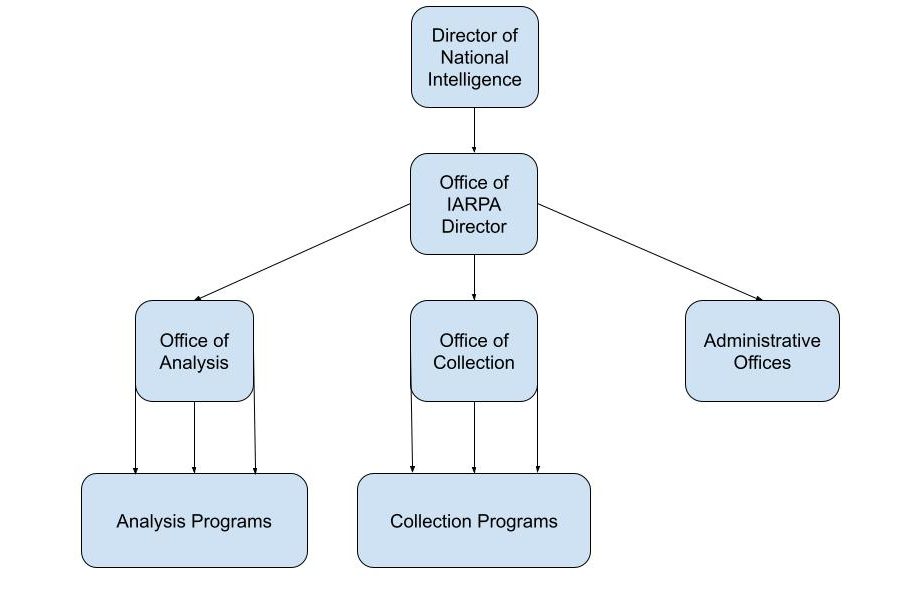
Org chart sketched from publicly available sources; not an official agency diagram
IARPA is led by a Director appointed by the Director of National Intelligence (DNI). The director oversees the agency’s strategy, research priorities, and operations. A Deputy Director and a small administrative team support the director.
IARPA’s four main research areas are AI, quantum computing, machine learning, and synthetic biology. The agency organizes this portfolio through two programmatic offices:
- Office of Analysis, which focuses on maximizing insights from data
- Office of Collections, which aims to improve data collection via new sensor and transmission technologies, new collection techniques, and by gaining access to previously inaccessible sources
Each office is led by its own Office Director, who reports directly to IARPA’s Director. Together, these two Office Directors oversee a combined ~20 PMs, each responsible for designing and executing research programs within their domain.
IARPA’s Analysis and Collections offices both manage AI-related research programs, including:
- Entangled Logical Qubits (ELQ): advances fault-tolerant quantum computing for complex problem-solving.
- Broad Agency Announcement for Innovative AI for Intelligence Community (B24IC): encourages novel approaches in AI for actionable intelligence within the wider intelligence community.
- Building Evaluations for Neural Generation of Adversarial Language (BENGAL): addresses potential threats and vulnerabilities within large language models (LLMs).
- Biometric Recognition and Identification at Altitude and Range (BRIAR): focuses on accurate biometric recognition through face and voice data in challenging conditions.
- Human Activity Initial Threat Assessment and Characterization (HAYSTAC): develops models for monitoring human movement across time and locations for pattern analysis.
- Responsive and Secure Countermeasures for Intelligent Networked Defense (ReSCIND): expands the defender’s toolkit for neutralizing adversarial AI
- Trojans in AI (TrojAI): investigates methods for detecting and mitigating hidden threats within AI systems.
IARPA’s Analysis and Collections offices both manage bio-related research programs, including:
- Bio-Intelligence and Biosecurity for the Intelligence Community (B24IC): advances biotechnologies to provide an intelligence advantage, including new methods to detect and prevent biological threats.
- Pathogen Identification and Characterization through Agent-agnostic Rapid Detection (PICARD): develops sensors to rapidly identify aerosol particles in challenging environments.
- Toxic Environmental Exposure, Reconstruction, and Exploitation (TEI-REX): develops techniques to evaluate the exposure of individuals or organisms to environmental hazards.
Advanced Research Projects Agency for Health (ARPA-H)
Launched in 2022 and housed under HHS, ARPA-H funds biomedical research to drive revolutionary improvements in medicine and health. ARPA-H R&D to date has spanned efforts to restore vision to people with blindness, test novel blood cancer treatments, develop a computational platform for multi-virus vaccine design, and transform donor kidney availability.
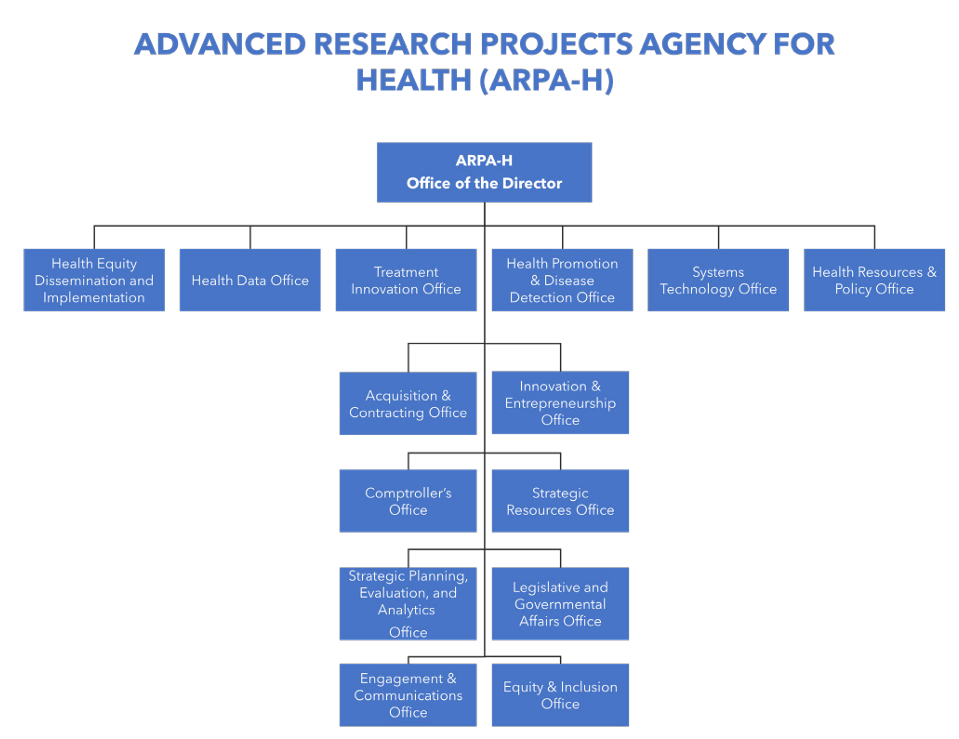
ARPA-H is led by a Director, appointed by the Secretary of HHS. ARPA-H manages R&D in its focus areas—health science futures, scalable solutions, proactive health, and resilient systems—through six mission offices, including a Health Data Office and a Systems Technology Office. ARPA-H’s other offices fill administrative, communications, and other support functions for the agency.
Many ARPA-H programs focus on deploying AI in biomedical research or healthcare, including:
- Performance and Reliability Evaluation for Continuous Modifications and Useability of AI (PRECISE-AI): develops techniques to automatically identify and correct performance degradation of AI-enabled clinical decision support tools.
- Chatbot Accuracy and Reliability Evaluation Exploration Topic (CARE ET): develops novel technical approaches to improve the testing and evaluation of chatbot outputs for patient-facing applications.
Nearly all ARPA-H programs are bio-related, including:
- Antigens Predicted for Broad Viral Efficacy through Computational Experimentation (APECx):develops computational tools for designing vaccines that target many viruses at once.
- Building Resilient Environments for Air and Total HEalth (BREATHE): develops scalable platforms to improve indoor air quality nationwide.
Advanced Research Projects Agency-Energy (ARPA-E)
ARPA-E, created in 2009 within DOE, funds transformational energy technologies to improve energy security, efficiency, and sustainability. Since its founding, ARPA-E has provided $4.2 billion in R&D funding to over 1700 projects, formed 167 companies, received 1,225 patents, and attracted $14.6 billion in private-equity follow-on funding.
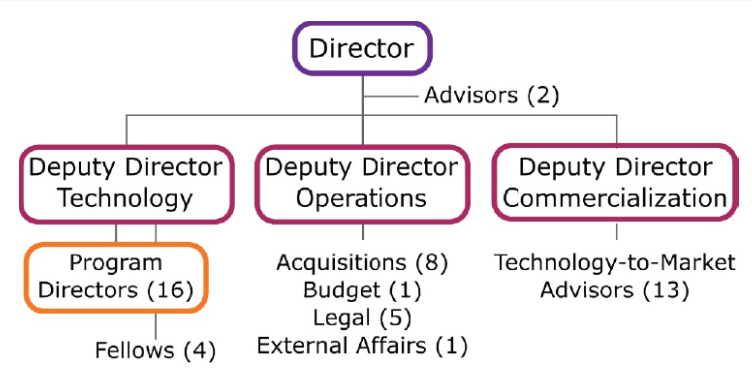
Source (from 2016)
ARPA-E is led by a Director who oversees deputy directors of technology, operations, and commercialization. ARPA-E’s Deputy Director of Technology oversees ~15-20 program directors (similar to other ARPAs’ term-limited PMs) who manage energy innovation-focused programs. ARPA-E also intermittently issues open funding solicitations (OPEN programs), and the agency augments its team with Tech-to-Market (T2M) advisors, who help transition promising technologies to market.
ARPA-E organizes its programs into seven primary research areas: Agriculture and Bioenergy, Buildings, Grid, Industrial Efficiency, Power Generation, Resources, and Transportation. Many ARPA-E programs relate to AI policy in two key ways: 1) AI’s growing energy demands make ARPA-E’s energy innovation mission increasingly important, and 2) AI use can help advance energy innovation and efficiency.
AI-related programs at ARPA-E include:
- Generating Electricity Managed by Intelligent Nuclear Assets (GEMINA): aims to develop digital twin technology for advanced nuclear reactors and transform operations and maintenance systems in the next generation of nuclear power plants
- Design Intelligence Fostering Formidable Energy Reduction and Enabling Novel Totally Impactful Advanced Technology Enhancements (DIFFERENTIATE): seeks to accelerate energy technology development through machine learning
- Catalytic Application Testing for Accelerated Learning Chemistries via High-throughput Experimentation and Modeling Efficiently (CATALCHEM-E): pairs AI with self-driving labs to enable the creation of low-carbon fuels and commodity chemicals
- PingThings: aims to develop a national infrastructure for analytics and AI on the power grid
Bio R&D at ARPA-E
ARPA-E’s biotechnology and bioeconomy programs, primarily housed in Agriculture and Bioenergy, include:
- Energy and Carbon Optimized Synthesis for the Bioeconomy (ECOSynBio): uses synthetic biology to develop biomass conversion systems that optimize carbon use and resource efficiency; helps achieve economies of scale for industrial applications
- Macroalgae Research Inspiring Novel Energy Resources (MARINER): develops technology for large-scale macroalgae cultivation for use in fuel, chemicals, and animal feed, advancing US leadership in marine biomass production
- Systems for Monitoring and Analytics for Renewable Transportation Fuels from Agricultural Resources and Management (SMARTFARM): creates technologies that quantify emissions from biofuel feedstocks at the field level, enabling efficient carbon management and new market incentives in biofuel production
- Technologies to Emend and Obviate SYnthetic Nitrogen’s Toll on Emissions (TEOSYNTE): aims to lower harmful nitrous oxide emissions from the cultivation of corn and sorghum used for US ethanol production by 50%
- Transportation Energy Resources from Renewable Agriculture (TERRA): develops tools that increase the rate of genetic improvement and yield of bioenergy crops grown in the field
Types of roles
ARPA agencies rely on a mix of government staff, fellows, and contractors to manage their programs. This section outlines the major roles found at these agencies, from entry-level to senior positions.
Some ARPAs host fellows to support program development. These fellowships (typically 1-2 years) enable early-career scientists to support PMs, engage with researchers across sectors, and contribute to the agency’s strategic direction. Explore a list of ARPA fellowships below.
Science, Engineering, and Technical Assistance (SETA) Contractors
SETAs are government contractors who support PMs (or PDs) in technical and operational tasks. Their roles vary significantly depending on the program, with the supervising PM substantially influencing their work scope. Responsibilities range from managing day-to-day operations of entire programs to simply assisting with presentations or program deliverables.
SETAs are often employed by large government contracting firms (e.g. Booz Allen Hamilton, Strategic Analysis Inc.) and may work on-site at the ARPA agency. Unlike government staff, SETAs are not term-limited and often provide institutional memory and continuity as PMs cycle in and out.
There are three primary types of SETAs:
- Technical SETAs typically hold a STEM PhD and support programs by assessing new technologies, creating and presenting technical reports, tracking progress, and evaluating program plans.
- Program Management SETAs assist with planning and administration, including project management, budgeting, document preparation, and logistical coordination.
- Utility SETAsperform a mix of technical, managerial, and miscellaneous support, including tasks like legislative affairs or stakeholder engagement.
Program Managers (PMs)
PMs (or Program Directors, at ARPA-E) are mid- to senior-level staff who identify opportunities for transformative technological breakthroughs and design research programs to tackle those challenges. Once their supervising director (or board) approves a program, a PM leads every aspect of its execution: recruiting top scientists and engineers from industry, academia, and government labs; setting technical milestones; managing budgets; and ensuring that research efforts align with the agency’s overall mission of advancing cutting-edge technologies.
PMs typically serve for limited terms (2–6 years) to keep the agency’s portfolio fresh and dynamic. PMs are often recruited with a specific program idea in mind (candidates usually submit a concept paper as part of the application), but launch and lead multiple programs during their tenure. They operate with significant autonomy and can pivot projects as needed to align with the agency’s broader mission.
PMs typically hold an advanced STEM degree (often a PhD) and bring substantial expertise in their field. Most PMs have a strong record of innovative research or development—many have published extensively, launched successful startups, or held leadership positions in cutting-edge scientific projects. ARPAs hire PMs for their combination of technical excellence, entrepreneurial thinking, and ability to drive ambitious projects. Learn more about how to pursue PM roles below.
ARPAs also have specialized teams to help PMs and performers translate breakthrough research into real-world applications. These include ARPA-H’s Project Accelerator Transition Innovation Office (PATIO), DARPA’s Transition & Commercialization Support Program, and ARPA-E’s Tech to Market Advisors.
Office Directors (typically reporting to their respective ARPA Director) oversee a specific mission office (e.g. DARPA’s Biological Technologies Office), shaping office-wide strategy, budget, and staffing, as well as helping review and greenlight programs. These are senior roles, often filled by former PMs.
How to get an ARPA job
ARPAs recruit exceptional talent to help design, support, and launch transformative R&D programs. While most PMs are mid- to senior-career professionals, opportunities exist for early-career scientists and STEM students, including fellowships, contractor roles, and internships. This section outlines how to prepare for and pursue ARPA roles.
Government ARPA jobs and many SETA contracting roles are generally publicly listed, and candidates are selected through a rigorous, meritocratic process (though networking can help get your application flagged).
Early- and mid-career opportunities
Through fellowships, early-career scientists and technical experts (typically PhDs) work with PMs and other experts, actively engaging with researchers to probe technological barriers and advance their field’s frontier. Several ARPAs also offer internship programs.
- DARPA Innovation Fellowship – a full-time, two-year salaried “crash course” in DARPA’s active portfolio management for science and tech development. The program is open to recent PhD graduates, active-duty military with STEM degrees, and exceptional undergraduate or graduate STEM students. Cohorts start every six months; fellows work in-person in Arlington, VA.
- Service Chiefs Fellowship– A 3-month fellowship for outstanding mid-career military officers (O-4 to O-6 typically), who can be nominated by their service to study technical areas related to their service branch.
- Geoeconomics Summer Study (RAND and DARPA) – A 4-week paid residency in DC for undergraduate and graduate students to draft research papers on priority topics in geoeconomics.
- ARPA-E Fellowship – a two-year, full-time program for recent PhD graduates in science or engineering fields. Fellows work on-site in DC to analyze energy innovation trends, identify technology gaps, and help shape future ARPA-E programs. The application includes essays, references, and interviews. US citizenship and a completed or near-complete PhD are required. New fellows are selected twice per year.
- ARPA-E Summer Scholars – internships to assist in defining commercialization pathways for technology development programs.
- AAAS Science & Technology Policy Fellowships (American Association for the Advancement of Science) – a 12-month fellowship in DC for STEM PhD holders with four separate tracks, placing fellows within the executive branch, judicial branch, legislative branch, or in a nonprofit.
- Horizon Fellowship (Horizon Institute for Public Service) –a 6-24 month full-time US emerging technology policy fellowship facilitating job placements in the US executive branch, Congress, and think tanks for early- and mid-career individuals.
- Big If True Science Accelerator (Renaissance Philanthropy)– a 15-week program giving scientists, engineers, and entrepreneurs “the skills, networks, and strategic insight needed to secure institutional backing and bring their visionary programs to life.” Following structured mentorship and training, fellows participate in a Demo Day to showcase their program theses to government moonshot agencies, philanthropic foundations, and other influential organizations.
- Brains Accelerator (Speculative Technologies) –a 15-week part-time accelerator program helping talented scientists and technologists execute on ambitious research visions through training, mentorship, and connections (like a “Y-Combinator for pre-commercial nonprofit science”). Fellows attend a 2-day kickoff workshop and a closing Brains Summit, receive guidance from experienced DARPA and ARPA-E mentors, participate in weekly personalized activities and small group meetings, and share their ideas with potential funders and partners.
PM roles
Most ARPA PMs are mid- to senior-career researchers or technologists with a strong record of innovation and leadership in academia, industry, government, or the military—typically bringing 10+ years of subject matter experience.
DARPA’s application page, for example, describes its key qualifications:
“Our ideal candidates have been brilliant, done incredible work, and produced game-changing ideas. To thrive at DARPA, you need to move confidently forward with risks that cause most people to stop. You must operate with urgency and an inherent desire to leave a lasting mark during your fixed tenure.”
While PM roles are competitive, they are term-limited (usually 3–5 years), so new positions open regularly. PhDs are common among PMs at all ARPAs, but not always strictly required. The ARPAs generally offer public applications for PM positions, which typically require a written program proposal answering the “Heilmeier questions” (see also this ARPA-H guide).
To apply for PM roles, see the application pages at DARPA,IARPA,ARPA-E, and ARPA-H.
To better position yourself for a future ARPA PM role, consider:
- Familiarizing yourself with the ARPA model:Read the Heilmeier Catechism and practice applying it to problems you care about. Review past program pages (e.g. DARPA, ARPA-E) to see how successful programs are framed. If possible, attend Proposers’ Days or industry events (often open to the public) to observe how PMs pitch and refine program ideas.
- Participating in early-career programs: If you’re a student or early-career, try to participate in related programs: e.g. intern at a national lab, apply for DOW SMART scholarships (which can place you in defense labs, providing exposure to DARPA-funded work), or join competitions like Hackathons or Grand Challenges run by these agencies.
- Networking with current and former ARPA staff:While all candidates must go through the formal application process, networking can help get your application flagged and give you more visibility into the programs you’re interested in. Start by informally sharing your ideas and seeking advice from current or former PMs in your field. You can meet them at conferences (if they give a talk, introduce yourself), via colleagues who received ARPA funding, or through training programs like the BiTS Accelerator. They might mentor you on refining a program concept, internally recommend you, or alert you when a position opens.
- Completing an ARPA internship or fellowship(see opportunities above)
- Preparing to obtain a security clearance:ARPA roles generally require security clearances, with higher clearance levels typically required for DARPA and IARPA (TS-SCI). As our linked guide outlines, you can start preparing early to increase your chances of getting a clearance in the future.
- Publishing research in your field:ARPA roles value technical expertise demonstrated through peer-reviewed publications, conference talks, or patents. High-quality research helps establish your ability to identify meaningful problems, shows technical depth, and builds your reputation.
- Building R&D leadership experience: PMs essentially manage a portfolio of projects and stakeholders, meaning that ARPAs value candidates with experience leading teams or coordinating multi-partner efforts. If you’re an academic, this could be running a center or large grant; if in industry, managing a product from concept to launch.
- Starting as a research performer or consultant:One way to break into ARPAs is from the “performer” side. If you get funding from an ARPA as a researcher, you’ll interact with the PM and learn how the agency works. ARPAs select performers from a wide range of organizations—universities, startups, large contractors, nonprofits, and cross-sector teams—based on fit for their program. Successful performers sometimes get tapped to become the next PM. SETA contractors or project consultants also sometimes convert to government PM roles when an opening arises (more common at DARPA and IARPA).
- Getting an advanced STEM degree:While not strictly required, advanced STEM degrees (typically PhDs) are very common among ARPA PMs—ARPAs seek leaders with deep expertise in their fields.
Researching ARPA programs relevant to emerging technology
If you’re interested in working on emerging technologies at an ARPA, it’s worth doing some targeted research to understand which programs or offices are most relevant:
- Start with online research: Each ARPA’s website includes a searchable database of recent and current programs, often including the PMs leading them (see programs for DARPA, IARPA, ARPA-H, and ARPA-E). These programs cycle in and out over time, so it’s worth checking back regularly or subscribing to agency updates.
- Conduct informational interviews:Many ARPA programs—especially early-stage efforts or those with security sensitivities—lack comprehensive details online. To better understand specific programs of interest, it’s often helpful to speak directly with:
- Former or current PMs
- SETA contractors who support ARPA programs
- Staff from parent departments or partner agencies (e.g. DOW, DOE, HHS) who regularly interact with ARPAs
You can often identify these individuals through LinkedIn or agency websites and request an informational call to learn more about program design priorities, office culture, and office-wide focus areas. See our guide on setting up and conducting informational interviews.
Stay updated on each ARPA’s programs and opportunities through these sources:
- DARPA: subscribe to the DARPA RSS News feed, the DARPA Podcast, and follow DARPA on LinkedIn, X, YouTube, and Instagram
- IARPA:visit the IARPA Newsroom and subscribe to the IARPA Podcast
- ARPA-H:subscribe to the ARPA-H Vitals newsletter
- ARPA-E:visit the ARPA-E Newsroom and subscribe to the ARPA-E Newsletter
This article was written in collaboration with Byron Cohen.
Further reading
- The ARPA Model: A Reading List, Janika Schmitt & Jake Swett, Institute for Progress (2024)
- Coordinated Research Programs, Renaissance Philanthropy (2024)
- “How to Run Good DARPA Programs”: an interview with former DARPA PM Joshua Elliott, Statecraft (2023)
- “How to Predict the Future”: an interview with former IARPA Director Jason Matheny, Statecraft(2023)
- Building a Culture of Risk-Taking, Jennifer E. Gerbi, former Acting Director of ARPA-E (2023)
- A Growing Number of Governments Hope to Clone America’s DARPA, The Economist(2021)
- Defense Advanced Research Projects Agency: Overview and Issues for Congress, Congressional Research Service (2021)
- ARPA-H: Accelerating Biomedical Breakthroughs, Francis S. Collins, Tara A. Schwetz, Lawrence A. Tabak, & Eric S. Lander (2021)
- Funding Breakthrough Research: Promises and Challenges of the ARPA Model, Pierre Azoulay, Erica Fuchs, Anna P. Goldstein, & Michael Kearney (2019)
- The Pentagon’s Brain: An Uncensored History of DARPA, America’s Top-Secret Military Research Agency, Annie Jacobsen (2015)
- A Day in the Life of a PM, IARPA







Notes
-
At DARPA’s Biological Technologies Office (BTO), for example, a small exploratory effort (“seedling”) now typically receives around $2 million, while full programs often range from $20-$80 million. At IARPA, program managers (PMs) typically run two programs, overseeing a total of ~$20-40 million per year.
↩︎ -
The agency was originally established in 1958 as the Advanced Research Projects Agency (ARPA) and later renamed to the Defense Advanced Research Projects Agency (DARPA).
↩︎ -
An exception to this: The DARPA Director is appointed by the Secretary of War but, in practice, usually reports to the Under Secretary of War for Research and Engineering (USD(R&E)), who leads the Department’s science and technology efforts.
↩︎ -
At agencies like NSF or NIH, peer review occurs primarily at the front end—grants are selected based on written proposals assessed by expert reviewers. Given the exploratory nature of traditional basic research, there’s typically limited formal assessment of technical performance or comparison across grantees during the course of the work.
↩︎ -
ARPAs also use flexible contracting mechanisms that allow for faster project start-up and wind-down, support for prototyping, and customizable agreements—such as Technology Investment Agreements (TIAs)—that address intellectual property and other complex terms. Each ARPA aligns its research goals with the mission of its parent department (e.g. defense priorities for DARPA, intelligence needs for IARPA).
↩︎ -
At DARPA, program managers select performers without external peer review, giving them full autonomy to shape programs and choose research teams. At ARPA-E, program directors do solicit external peer review, but they are not required to follow its recommendations and retain broad discretion in final program and performer selection.
↩︎ -
Because ARPA programs often tackle ambitious, cross-disciplinary challenges that fall outside the scope of any single academic field, PMs play a central coordination role throughout every project stage. They guide multiple research teams—often drawn from universities, established companies, startups, and beyond—toward a clearly defined applied “North Star.”Add your first note here.
↩︎ -
ARPA projects often “fail” in the sense that they don’t achieve their original technical goals or transition to end users—but they frequently still generate technological or scientific progress that informs future work.
↩︎ -
DARPA played a pivotal role in the development of GPS in the 1960s and 70s, recognizing its potential when satellite-based navigation was still a theoretical concept. Building on earlier research in satellite communications and radio signal timing, DARPA funded key prototype systems like Transit and later supported the NAVSTAR GPS program, which laid the groundwork for today’s global positioning infrastructure. This investment ultimately transformed GPS from scientific possibility into practical reality.
↩︎ -
This is a case of “positive externalities”: Knowledge generated from R&D tends to spill over to other firms and the broader public, effectively making it a public good. This means that even when a company invests in developing a technology, competitors may benefit without bearing the cost—a dynamic that can disincentivize firms from pursuing high-risk, long-term research that could have significant societal benefits but uncertain private returns.
↩︎ -
It’s less common for fellows and entry-level staffers to participate in these higher-level policy conversations.
↩︎ -
This guide excludes the Homeland Security Advanced Research Projects Agency (HSARPA), which was established by the Homeland Security Act of 2002. HSARPA operates within the Department of Homeland Security’s Science and Technology Directorate with a significantly smaller budget than DARPA (less than $1 billion annually compared to DARPA’s approximately $4.1 billion). Unlike its more autonomous counterparts, HSARPA functions as part of DHS’s broader R&D infrastructure, primarily funding technology development for DHS components like Customs and Border Protection.
↩︎ -
Although housed within the National Institutes of Health (NIH) for administrative purposes, ARPA-H operates independently and reports directly to the Secretary of Health and Human Services (HHS).
↩︎ -
Public per-office staffing information isn’t available; this estimate is based on DARPA having over 100 PMs in total across six offices.
↩︎ -
A common misconception is thinking BTO handles all bio-adjacent solutions, when its mission requires technologies that actually use biology. It’s not meant for general bio-related problems or technologies (like sequencing hardware or data infrastructure) unless biology is an active component.
↩︎ -
ARPA-E’s OPEN programsare periodic, broad-scope funding opportunities aimed at uncovering high-impact energy technologies that fall outside the agency’s focused program areas. These solicitations invite proposals across the full spectrum of energy applications, encouraging innovative solutions that might otherwise be overlooked. The application process typically involves submitting a concept paper, followed by a full application upon invitation, with selections based on technical merit and potential impact. ARPA-E’s Tech-to-Market (T2M) advisors play a crucial role in bridging the gap between technological development and commercial deployment. They work closely with project teams to develop strategies for market adoption, including identifying potential customers, partners, and investors, as well as addressing non-technical barriers to commercialization.
↩︎ -
Yes, that’s the real acronym. ARPA-E has a known fondness for ambitiously elaborate program names.
↩︎ -
This means that it’s often worthwhile to learn about the PMs you might be working with as a SETA, if possible. See our advice on conducting informational interviews.
↩︎ -
This varies by ARPAs; for example, DARPA PMs are initially appointed for two-year terms with possible extension to four years; ARPA-H PMs are initially appointed for three-year terms and can be renewed for six total years; IARPA PMs can serve a maximum of five years.
↩︎ -
Most PMs simultaneously lead multiple programs, up to six or more at DARPA. ARPA-H PMs, for example, lead an average of 3-5 programs during their tenure, launching on average one program per year. An incoming PM might both develop a new program while inheriting a mature one (at IARPA, ~half of all programs see a second PM take over mid-stream). While program duration generally spans 3-5 years across ARPAs, approaches to program inheritance vary significantly, with some organizations (like DARPA) closely tying programs to original PM tenure and others (like IARPA and ARPA-H) establishing formalized handoff processes for continuity. For successful technologies, PMs also manage transition to relevant sectors: military/industry (DARPA), energy departments/commercial applications (ARPA-E), intelligence agencies (IARPA), or healthcare systems (ARPA-H).
↩︎ -
Each ARPA PM typically leads at least one distinct program during their term. This includes setting the program’s vision, designing the structure (e.g. technical milestones, deliverables), securing funding, and recruiting performers (researchers and institutions to carry out the work). Each ARPA program can span many individual projects carried out by different research teams or companies.
↩︎ -
Note that this website is a project of the Horizon Institute for Public Service, which also runs the Horizon Fellowship.
↩︎ -
In IARPA, roughly 20% of PMs come from academia, 40% from industry, and 40% from government.
↩︎ -
The Heilmeier Catechism is a set of guiding questions developed by former DARPA Director George H. Heilmeier to evaluate high-risk research proposals. Widely used across the ARPAs and other advanced R&D organizations, the Catechism helps researchers clearly articulate the purpose, novelty, feasibility, and potential impact of a proposed program. The questions are:
- What are you trying to do? Articulate your objectives using absolutely no jargon.
- How is it done today, and what are the limits of current practice?
- What is new in your approach and why do you think it will be successful?
- Who cares? If you are successful, what difference will it make?
- What are the risks?
- How much will it cost?
- How long will it take?
- What are the mid-term and final “exams” to check for success?
-
Proposers’ Days are an informational events hosted by an ARPA where PMs introduce a new funding opportunity and present the technical vision, challenges, desired outcomes, and evaluation criteria of a forthcoming program. Thy are typically open to the public (with registration) and attract researchers, companies, and institutions interested in submitting proposals to conduct work under the program. While the official proposal evaluation happens later, PMs may use Proposers’ Days to begin identifying potential performers. An example from DARPA’s Cornucopia program Proposers Day can be viewed here.
↩︎ -
While SETA contractors and project consultants occasionally transition into PM roles, these moves are subject to ethics rules, conflict-of-interest reviews, and agency-specific policies. SETA roles are designed to provide impartial technical assistance, and converting to a government PM position in the same area can raise concerns about organizational conflicts of interest or procurement integrity. But transitions can and do happen, especially when these concerns are mitigated—for instance, if the individual is no longer affiliated with the SETA contracting company or if a sufficient “cooling-off” period has passed. Renee Wegrzyn, for example, served as a Booz Allen Hamilton SETA for DARPA before becoming a DARPA PM and later the founding director of ARPA-H.
↩︎